Minimalist interior design
Minimalism is not an empty room; it is an edited one. Warm whites, a few well-made pieces, clean lines and real breathing space. This guide shows the style room by room, and then on your own photos.
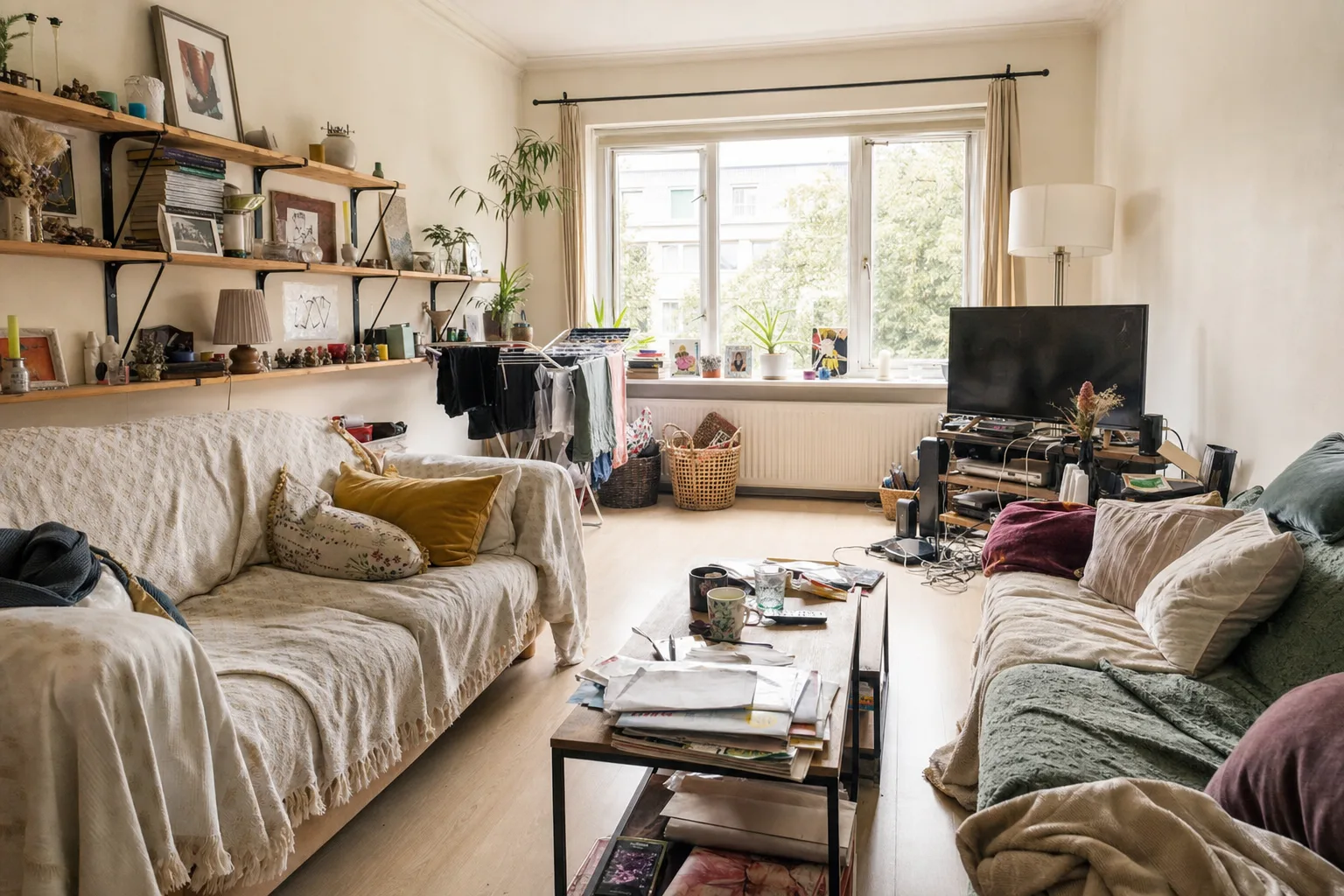
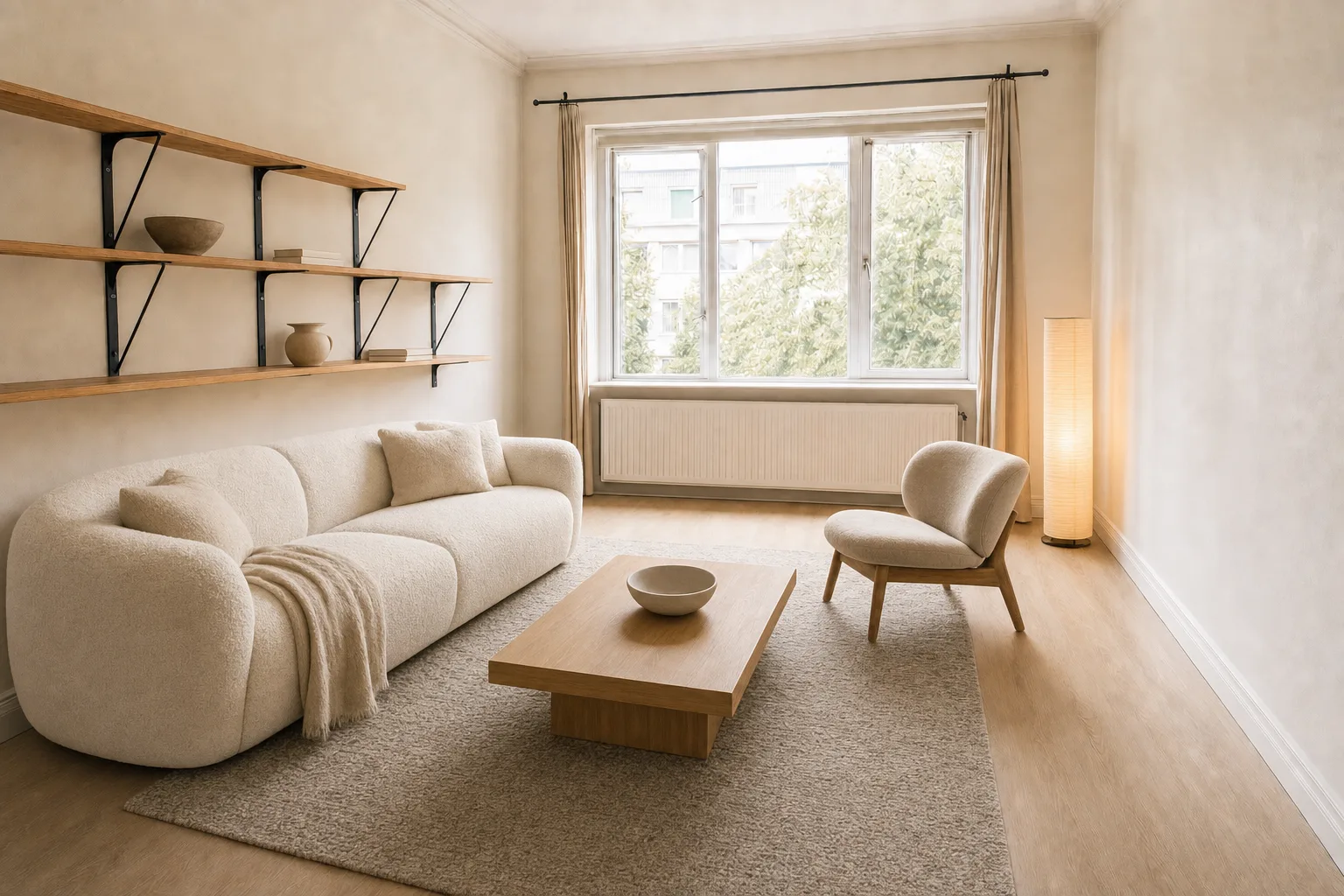 OriginalIn this style
What is minimalist interior design?
Minimalist interior design reduces a room to what earns its place: fewer pieces of furniture, chosen carefully, in a quiet palette of whites, greiges and one or two deep accents. Lines stay clean, storage stays closed, and surfaces stay almost bare. The point is not deprivation. It is clarity: with less in the room, the light, the proportions and the few objects you kept all get stronger.
Done badly, minimalism turns cold: white walls, hard edges and nothing to rest your eye on. Done well, it is the calmest style there is, because it keeps texture while cutting clutter. Matte plaster, wool, linen and pale wood carry the warmth that decoration would otherwise provide. The test of a minimalist room is simple: remove one more thing and the room gets worse, not better.
The elements of minimalist design
Color & light
- Warm whites and chalky neutrals, not stark white
- One deep accent at most: slate, umber or black
- Daylight treated as the main decoration
- Sheer curtains or none at all
- A few warm light sources instead of one bright one
Materials
- Matte plaster and painted wood
- Pale oak, ash or concrete floors
- Linen and wool in natural tones
- Stone or ceramic in small, heavy doses
- No busy patterns; texture does the work
Furniture
- Fewer pieces, each with a clear silhouette
- Low and horizontal rather than tall and busy
- Closed storage everywhere it counts
- Legs visible so the floor runs through
- One sculptural piece allowed per room
Details
- Surfaces kept nearly empty on purpose
- One artwork per wall, or none
- A single vase, bowl or candle per surface
- Cables, chargers and remotes out of sight
- Plants used sparingly, with strong shapes
The minimalist palette
Minimalism, room by room
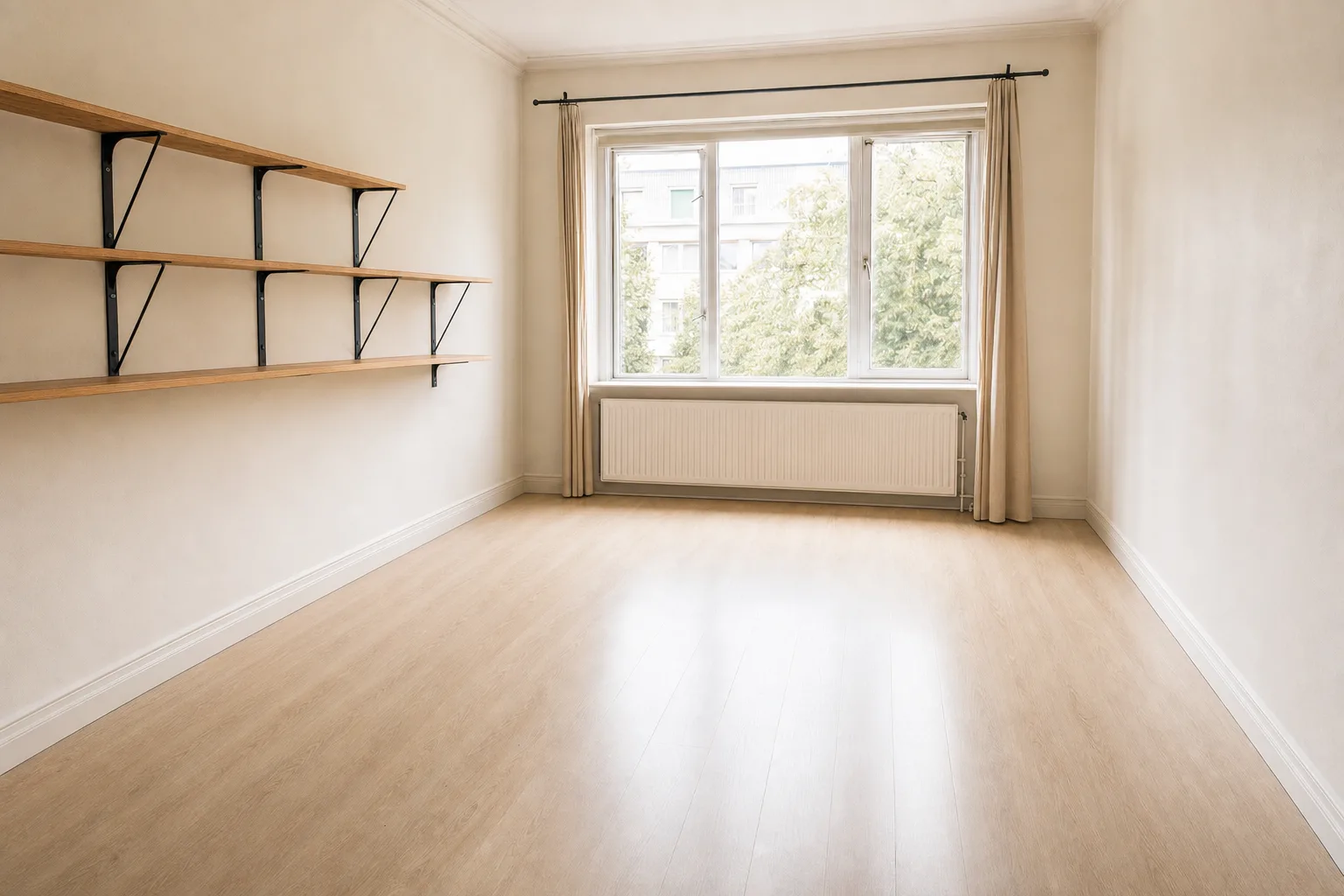
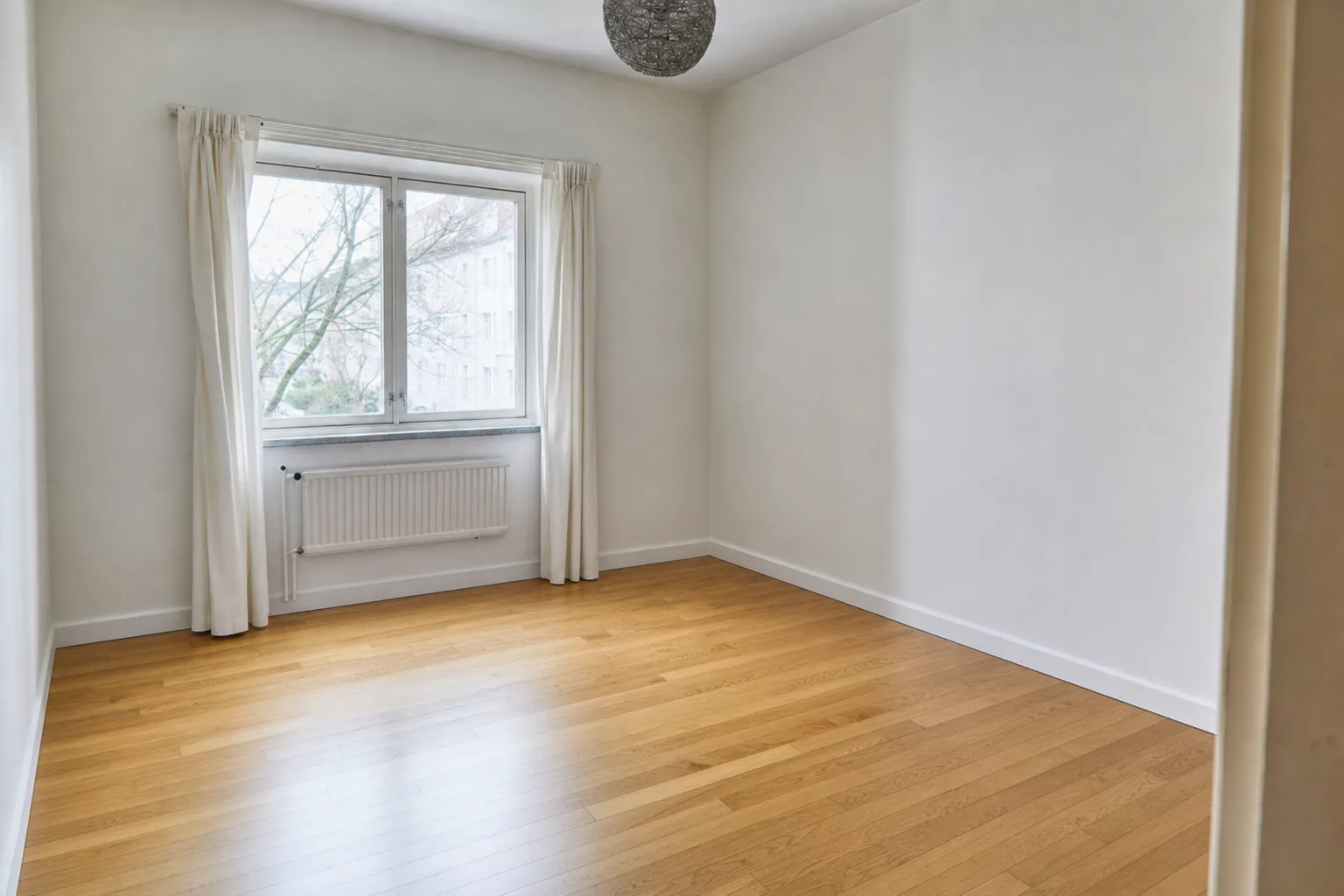
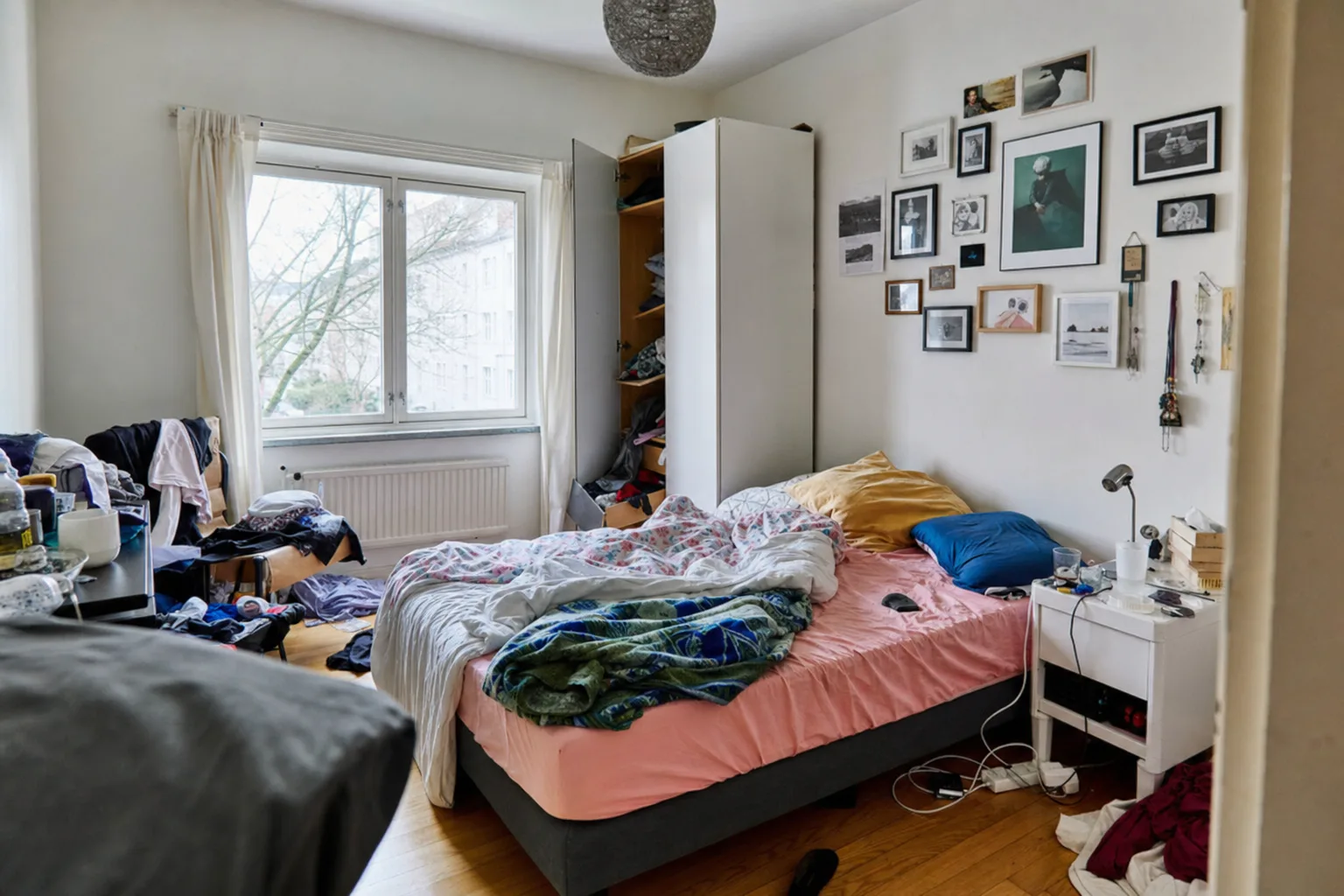
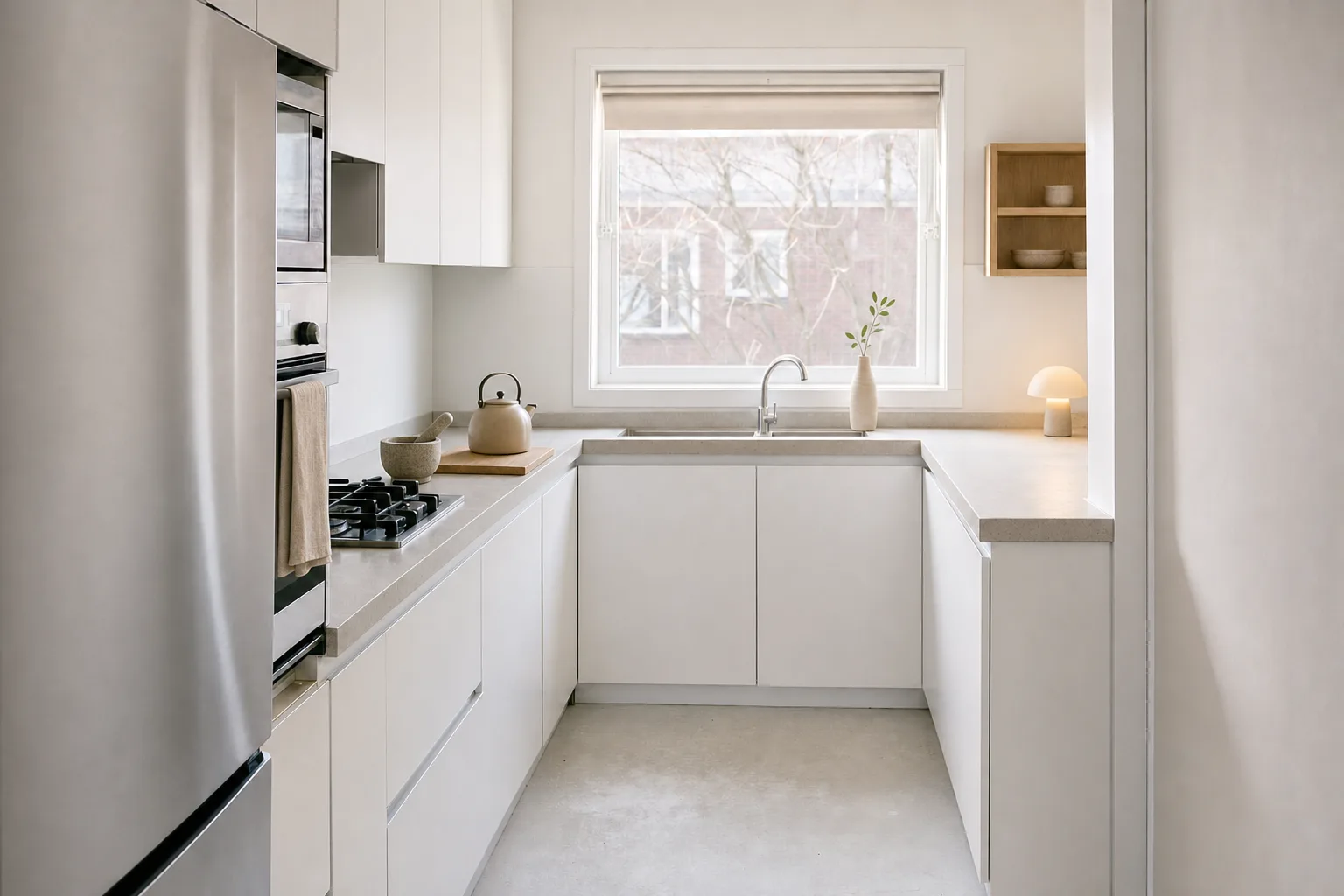
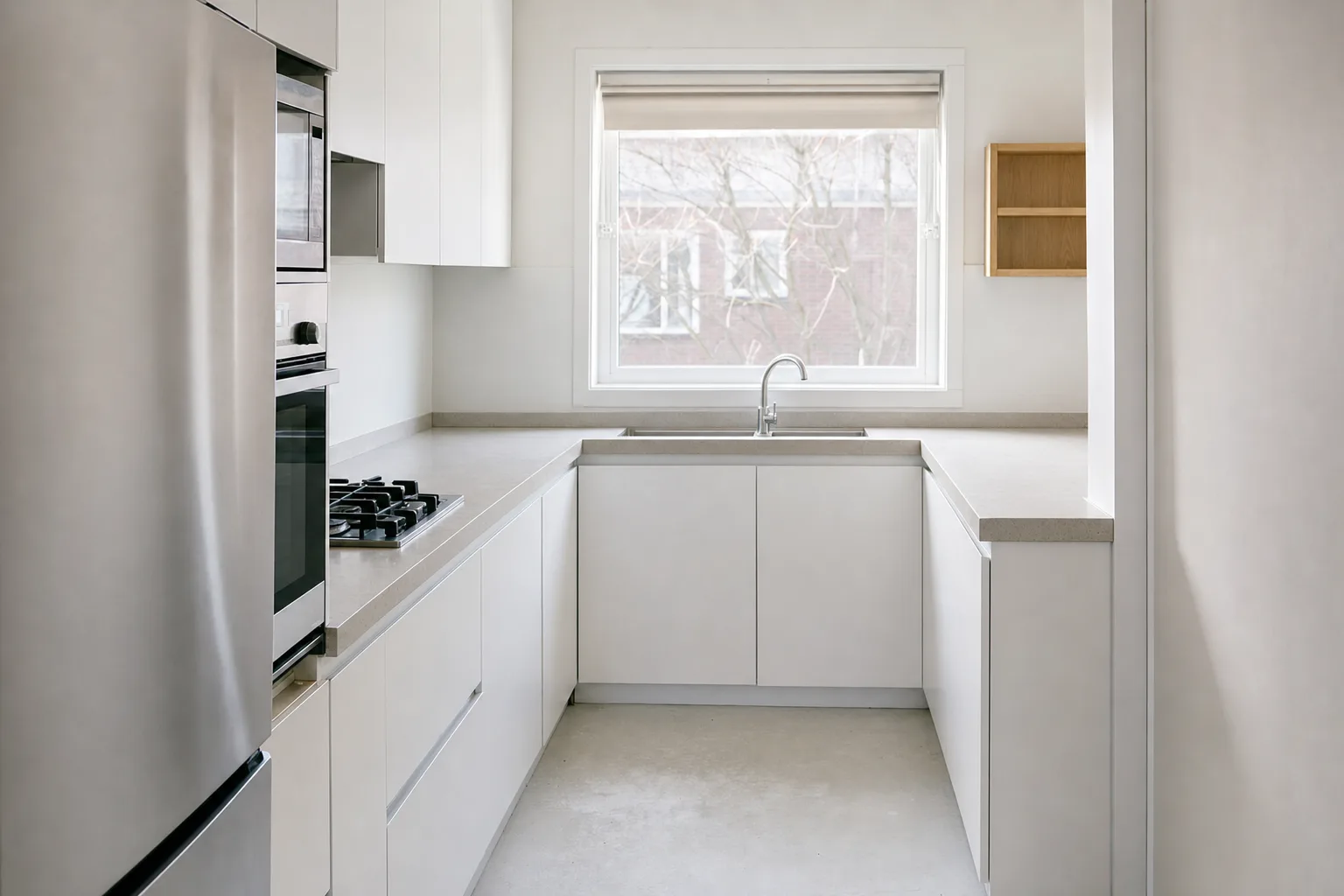
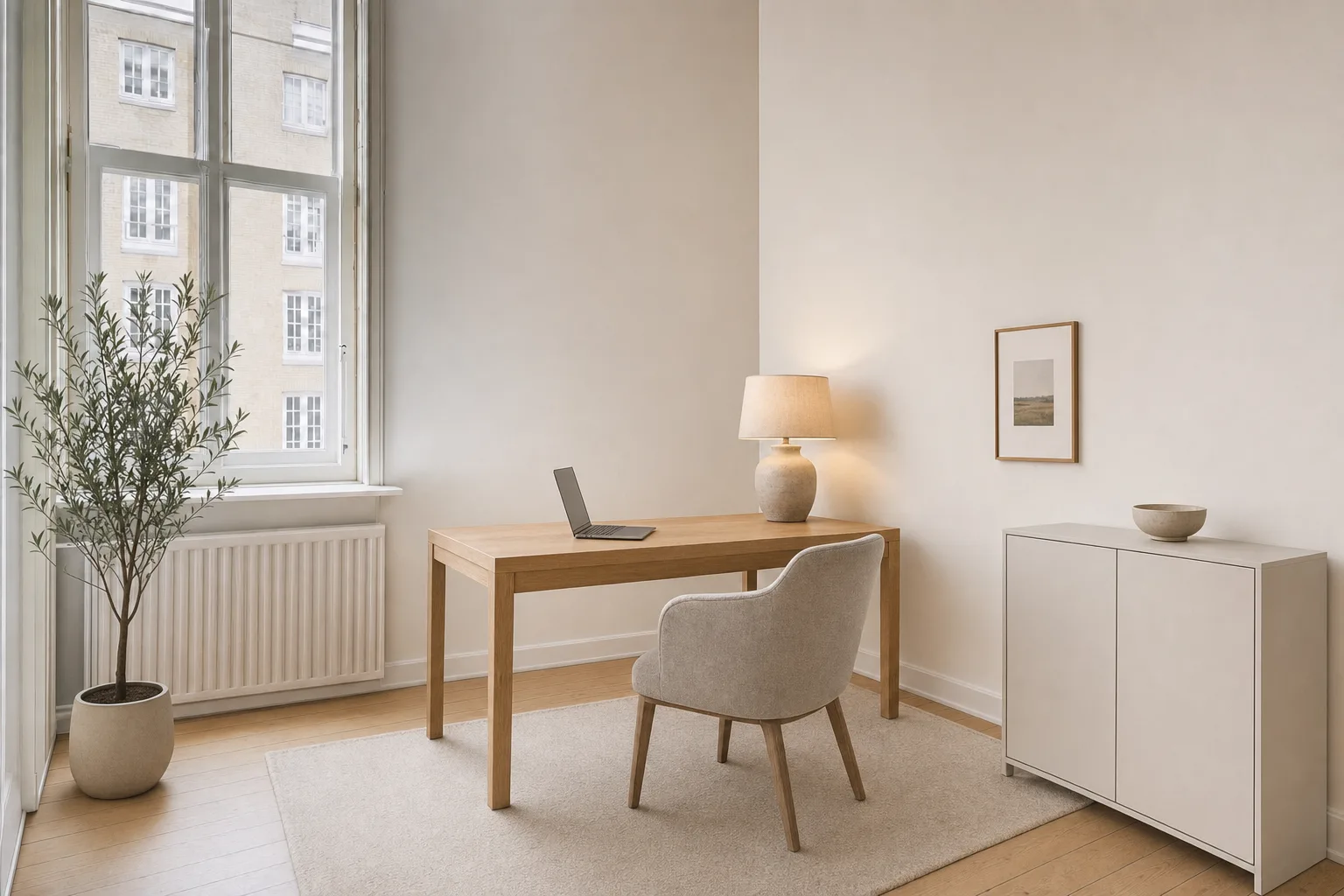
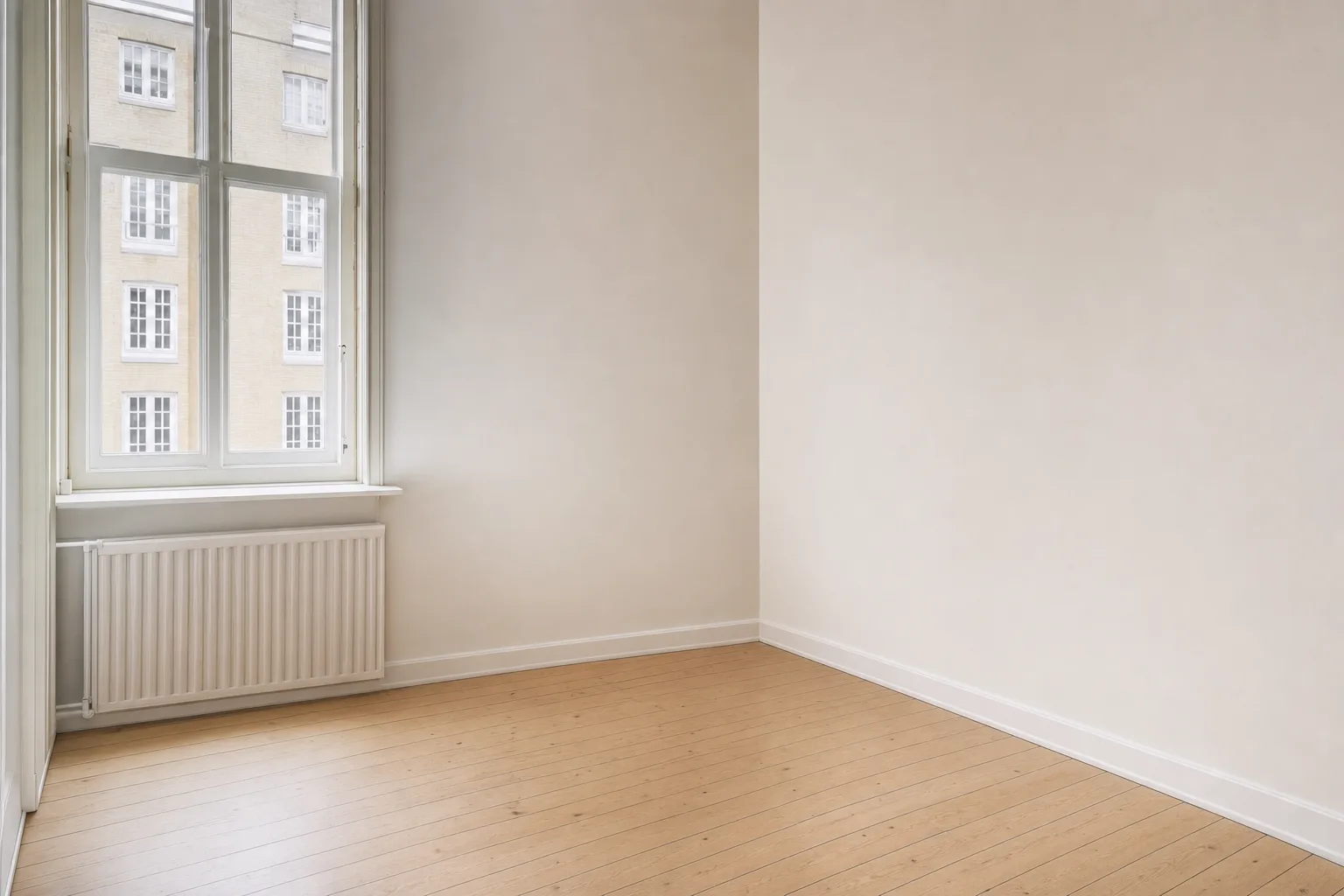
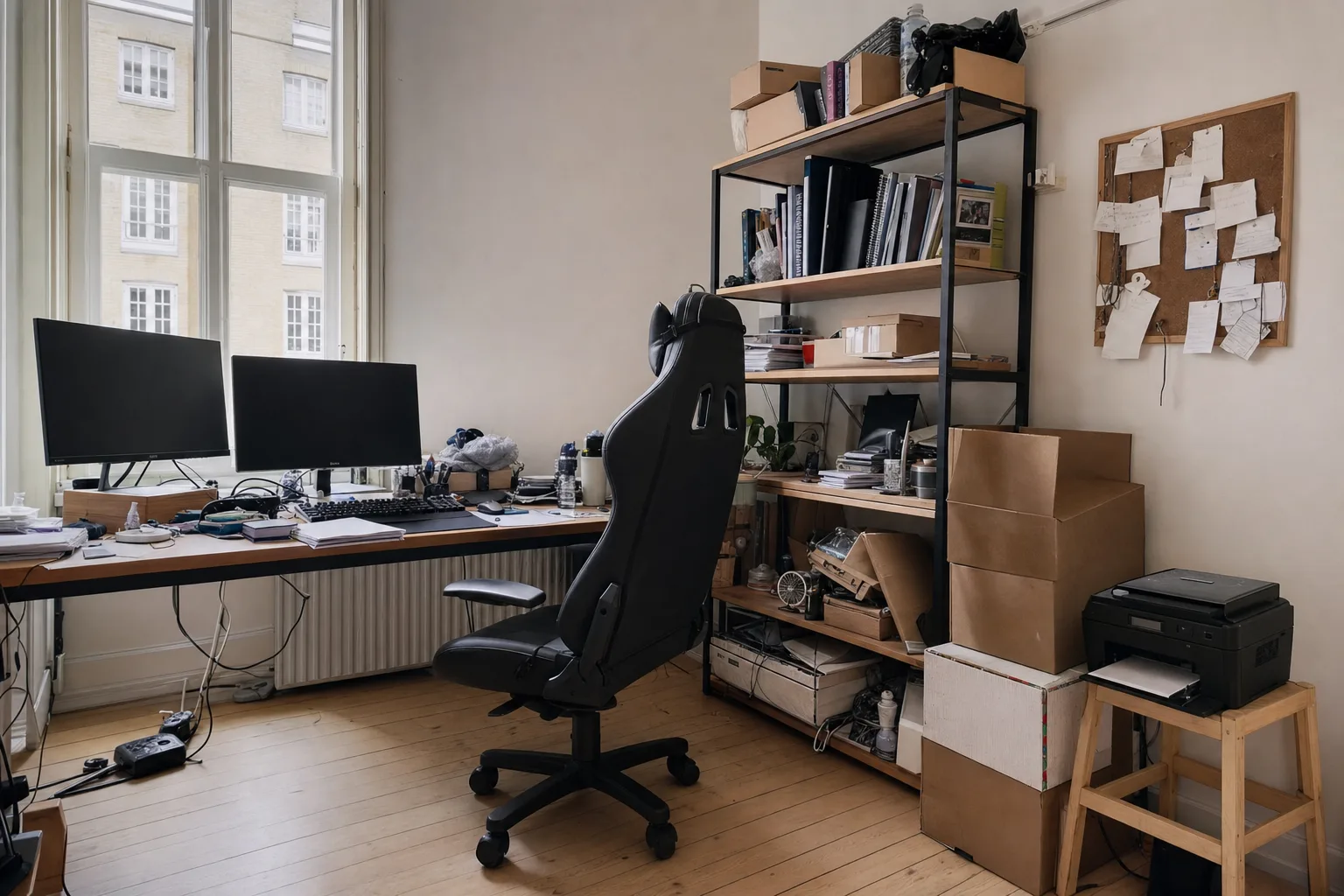
Every photo below is one real room, three ways: as it was, decluttered, and furnished in the style. Use the toggle to compare.
The minimalist living room
Start with what leaves: the second armchair, the shelf of objects, the cable basket. What stays is a comfortable sofa in a warm neutral, one coffee table, one rug that calms the floor, and a single sculptural piece, a lounge chair or a floor lamp. Hide the television's cables or the television itself. When the room holds five things you love instead of twenty you tolerate, the light starts doing the decorating.
The minimalist bedroom
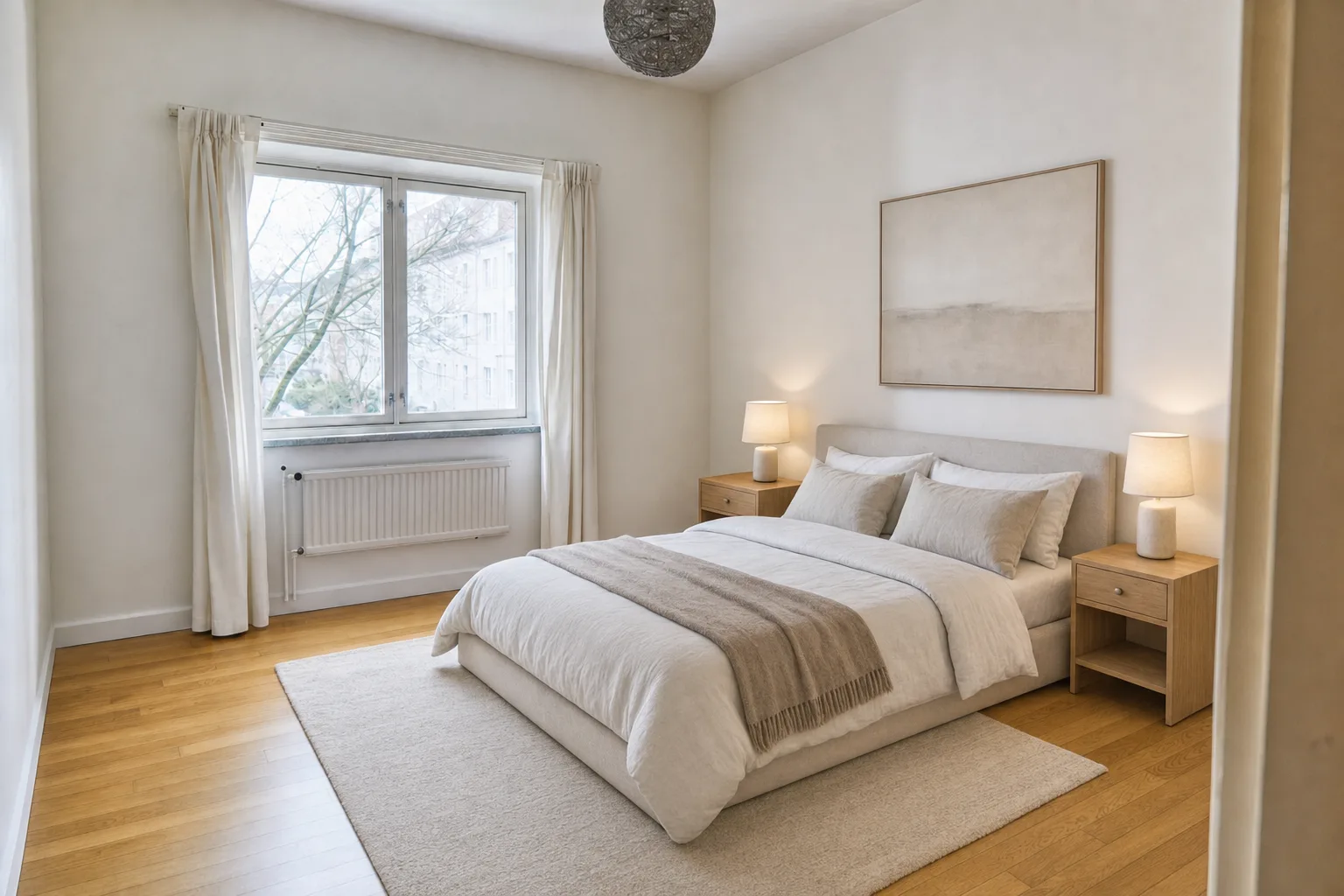
A minimalist bedroom is built for sleep, not storage. The bed sits low with washed linen in white and greige, nightstands hold a lamp and nothing else, and the wardrobe closes completely. Keep the walls bare or hang one calm artwork. Whatever currently lives on the chair, the dresser and the floor moves out of sight or out of the room. The emptiness is not a missing layer; it is the layer.
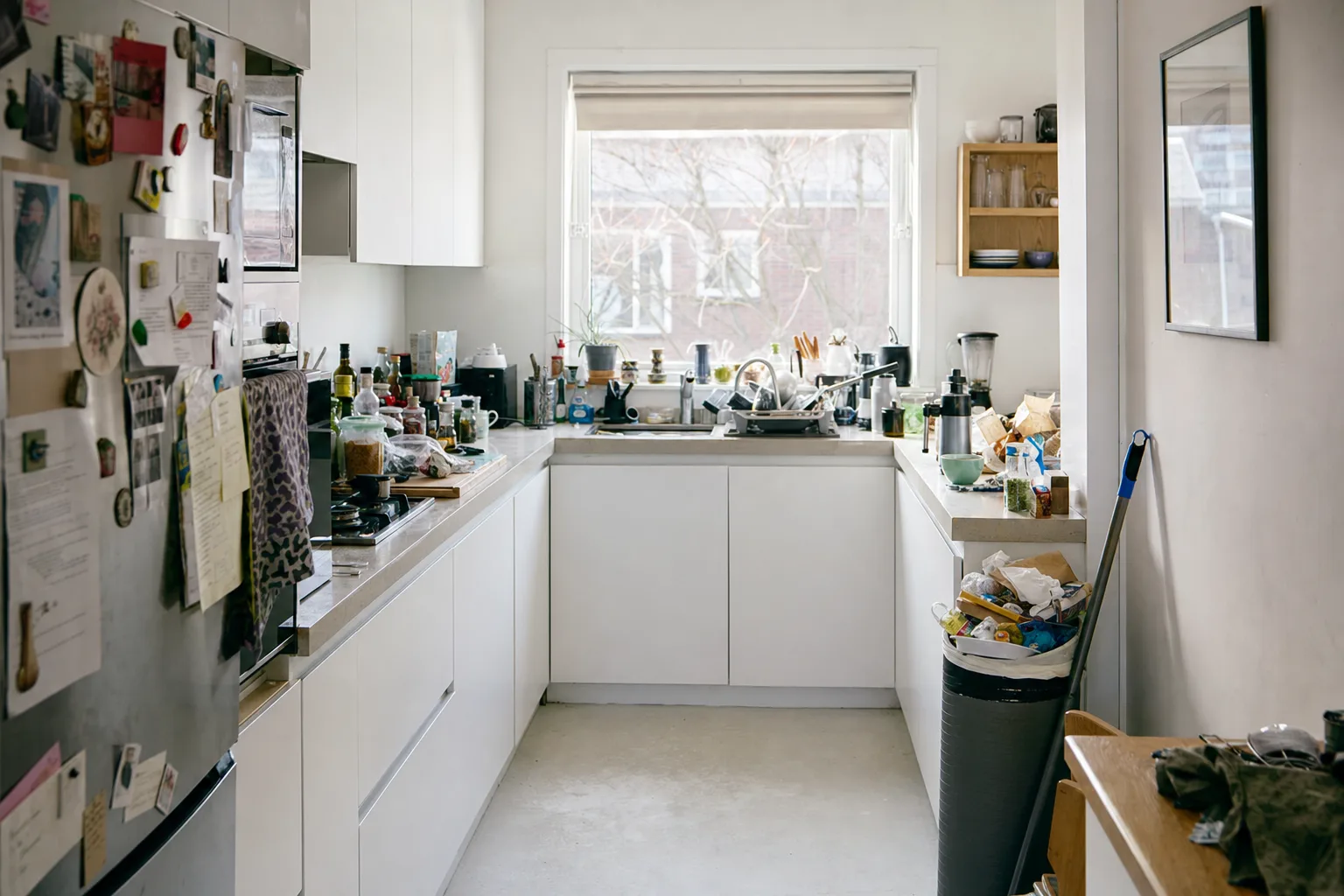
The minimalist kitchen
The counters make or break it. Clear them down to the one or two appliances you use daily, move everything else behind flat, handle-less fronts, and let one wooden board or stone mortar stand as the only decoration. A minimalist kitchen is not about owning less cookware; it is about the room reading as one calm surface when the cooking is done.
The minimalist home office
A desk with a clear top, a chair you can sit in for hours, closed storage for the paperwork, and a wall without a pinboard. Route the cables once, properly, and the room stays calm forever. Add one lamp with a warm bulb and one object you actually like looking at. Focus is the whole point of this room, and minimalism is simply focus, applied to furniture.
The minimalist bathroom
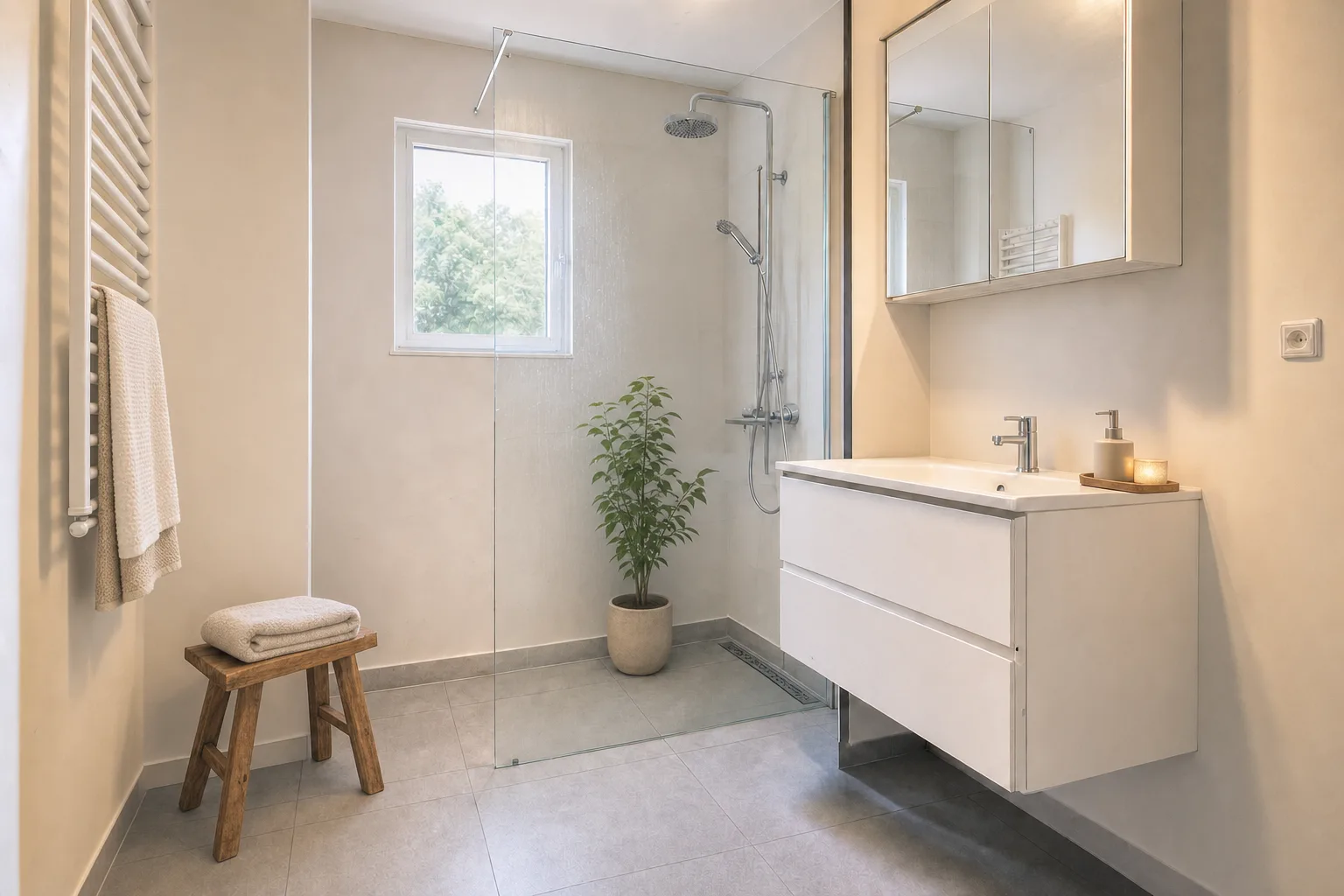
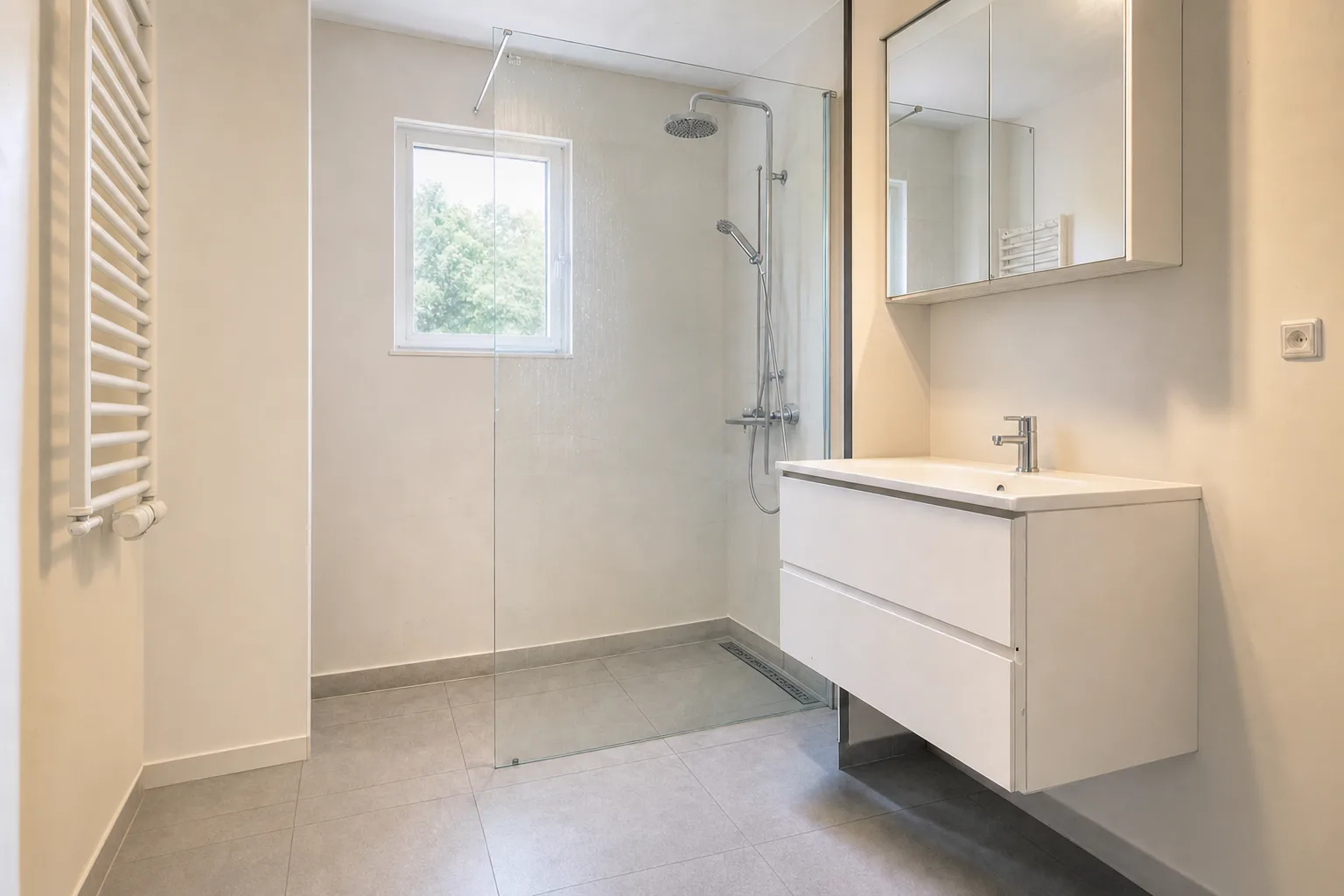
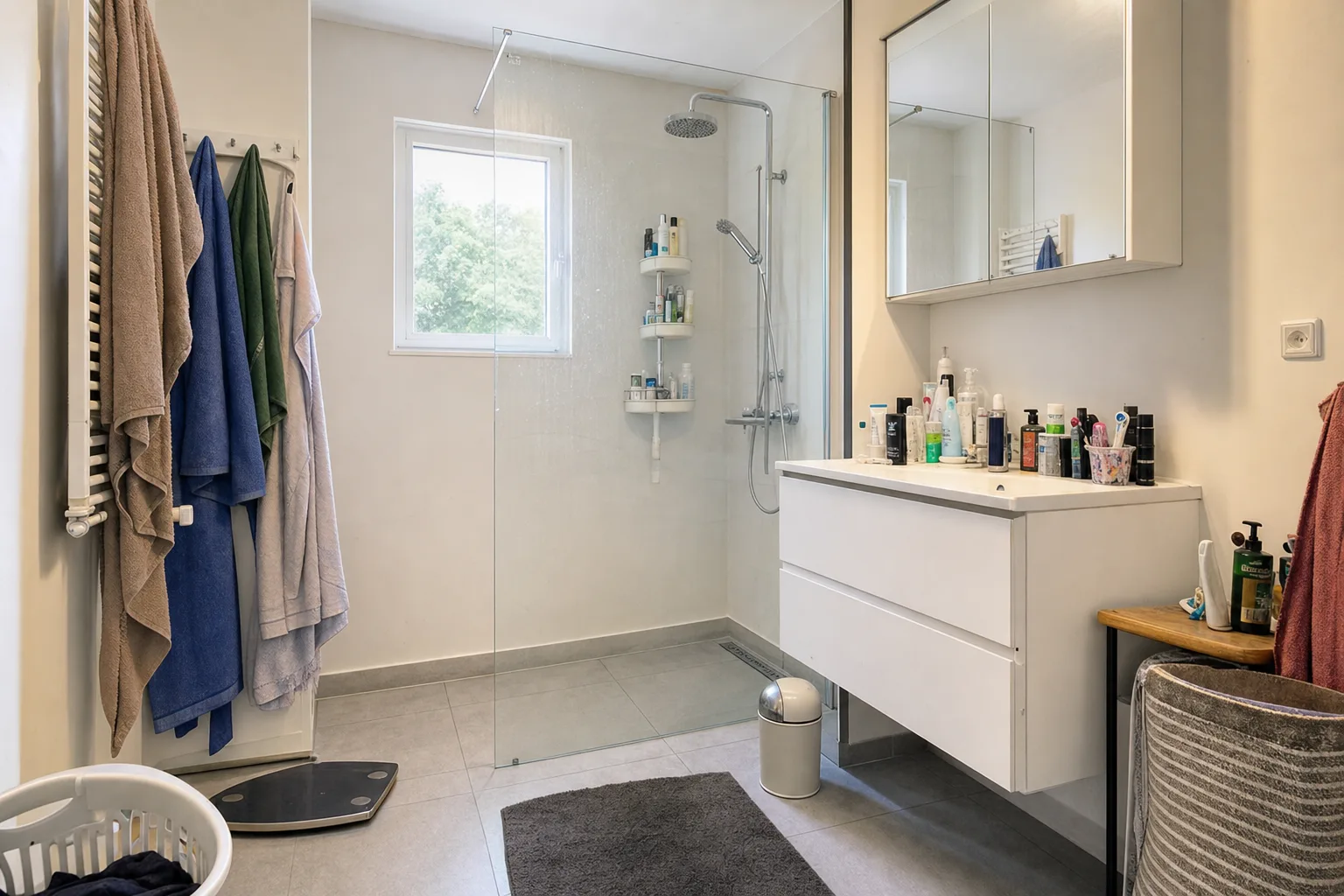
No room rewards minimalism faster. Clear every surface: bottles into a mirrored cabinet or a single tray, towels down to one set in white or greige, and the shower shelf down to three things. Add a wooden stool, a warm bulb instead of a cold one, and one plant that tolerates steam. A bathroom with empty surfaces reads as clean and calm before you have scrubbed anything.
See your own home in minimalist style
Upload a few photos of your rooms and describe the minimalist look once. Twelve Lumens declutters your rooms and refurnishes them in that style in minutes, architecture untouched, originals always kept. The first five images are free, no credit card.
Upload your photos
Straight from your phone — any room, exactly as it looks today.
Declutter, then restyle
One click clears the clutter; another furnishes the room in this style. Walls, windows and floors stay exactly where they are.
Compare and share
Original and restyled side by side, in high resolution — download them or share a before-and-after page.
Minimalism vs. similar styles
Minimalist vs. Scandinavian
Scandinavian is minimalism's cosier cousin: same pale palette and clean lines, but more textiles, more hygge, more visible life. Minimalism edits harder, keeps surfaces emptier and lets architecture, not decoration, carry the room.
Minimalist vs. Japandi
Japandi is warm minimalism with a Japanese accent: lower furniture, dark woods mixed in, handmade objects with visible imperfection. Pure minimalism is more neutral and more strict; Japandi allows itself more texture and contrast.
Minimalist vs. modern
Modern is a design language; minimalism is a discipline. A modern room can be full of statement pieces. A minimalist room applies the modern vocabulary of clean lines and honest materials, then removes everything that is not essential.
Minimalist design: common questions
What exactly is minimalist interior design?
A way of furnishing that keeps only what earns its place: few, well-chosen pieces with clean lines, a quiet palette of warm whites and greiges, closed storage and nearly empty surfaces. The reward is a room where light and proportion do the work decoration normally does.
What colors make a room minimalist?
Warm whites, chalk, greige and stone, with at most one deep accent such as slate, umber or black. Avoid stark blue-whites, which read cold. Keep textiles in the same range and let materials, wood, wool and linen, provide the variation instead of color.
How do I make a room minimalist without it feeling cold?
Keep the palette warm, not white; layer texture through linen, wool and matte plaster; use several small warm lights instead of one bright ceiling light; and keep one personal, sculptural object per room. Cold minimalism is usually a texture problem, not a color problem.
How do I start decluttering toward minimalism?
Work surface by surface, not room by room: clear the coffee table, the counters and the nightstands completely, then return only what you used this week. Move storage into closed cabinets. To see the end state before you commit, upload a photo to Twelve Lumens, describe the minimalist look once, and see your exact room decluttered and restyled. The first five images are free.
Is minimalism still popular in 2026?
Yes, though it has softened. The stark all-white version has given way to warm minimalism: chalky tones, natural texture and a little more comfort. The core idea, fewer but better things, has quietly become the baseline for most contemporary interiors.
More styles to explore
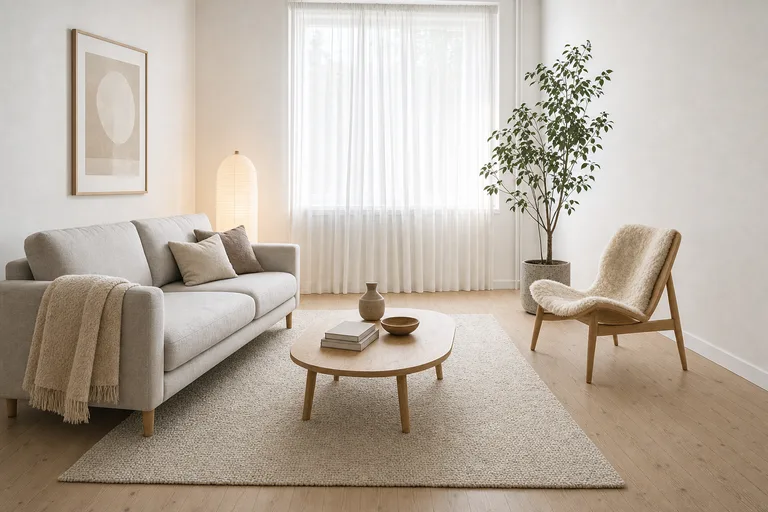
Scandinavian
Pale wood, warm white and soft texture — calm, bright rooms built for real life.
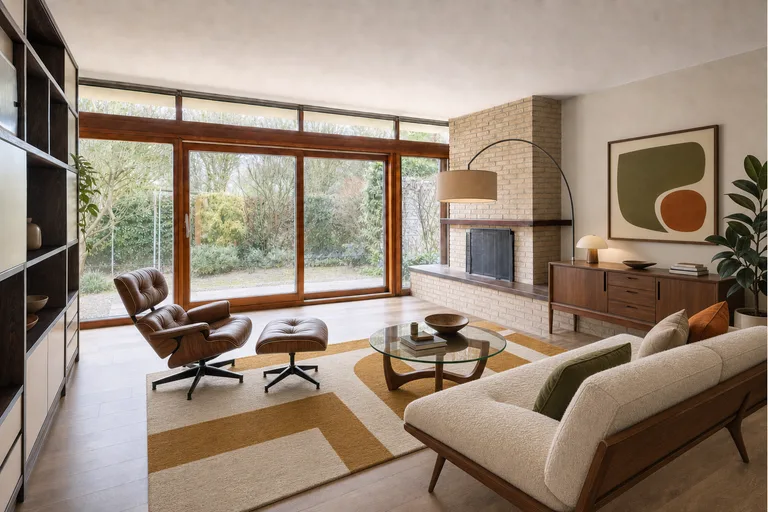
Mid-Century Modern
Walnut, tapered legs and confident color — the 1950s look that never left.
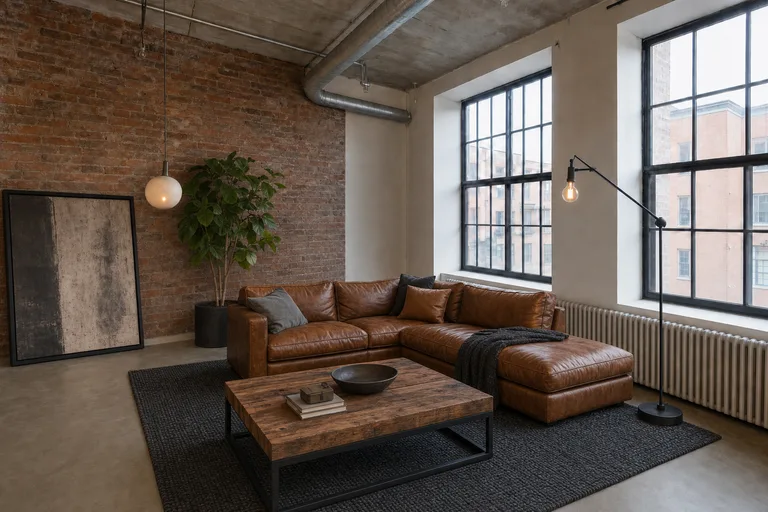
Industrial
Brick, steel and leather — raw materials made warm enough to live in.
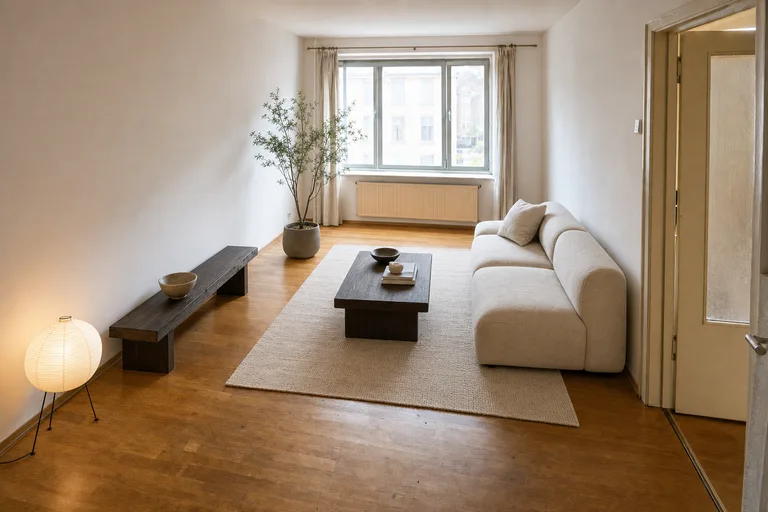
Japandi
Japanese calm meets Scandinavian warmth — low lines, warm wood and deliberate emptiness.
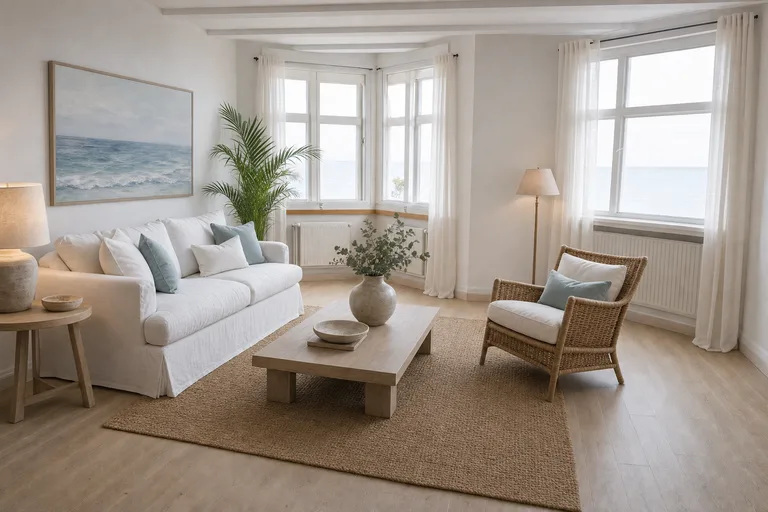
Coastal
Sea light, sand tones and washed linen — the beach-house feel, without the kitsch.
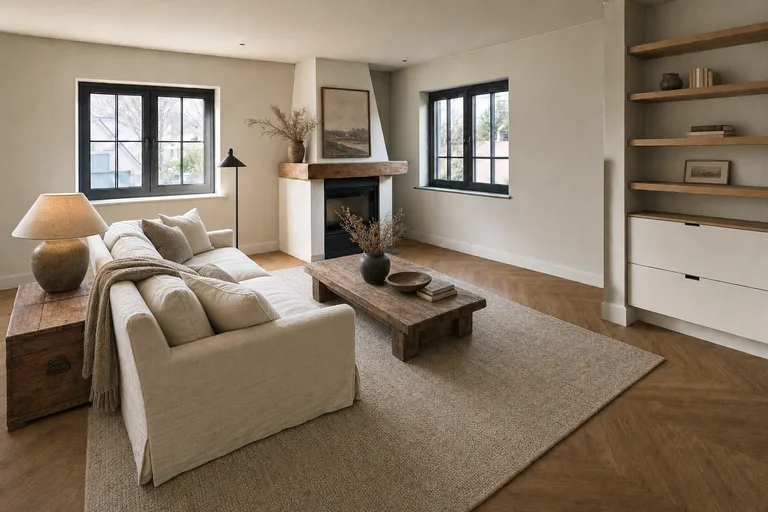
Modern Farmhouse
Clean lines meet rustic warmth — white walls, aged wood and black accents.
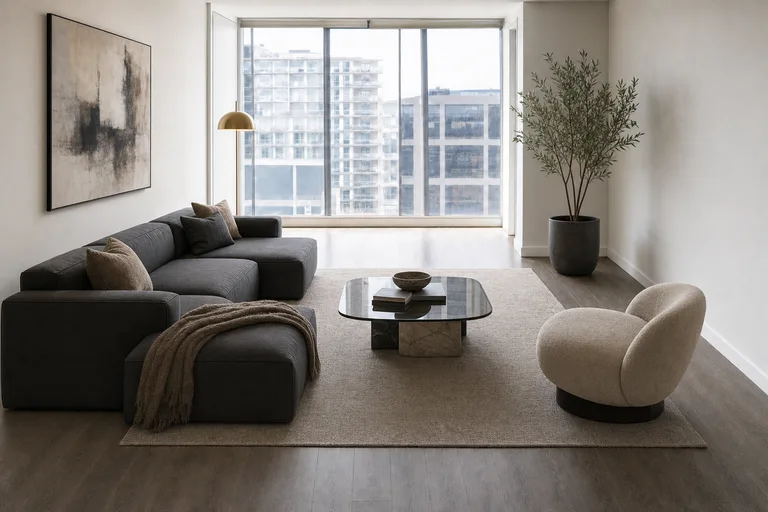
Modern
Clean lines, charcoal and brass — the current city look, warm instead of cold.
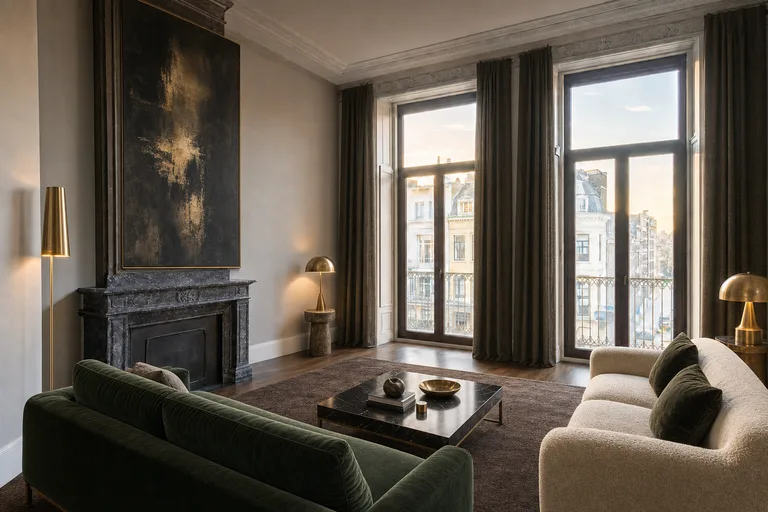
Luxury
Travertine, velvet and brass — editorial restraint where the materials carry the story.
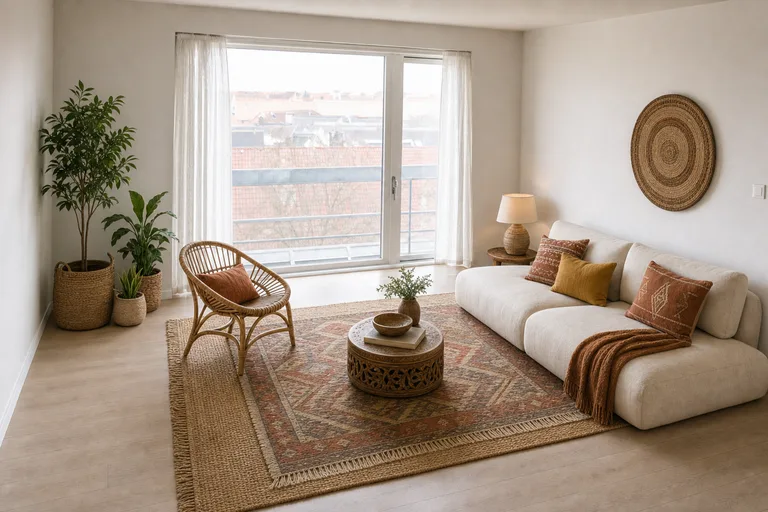
Boho
Rattan, terracotta and layered textiles — the collected look, curated instead of chaotic.
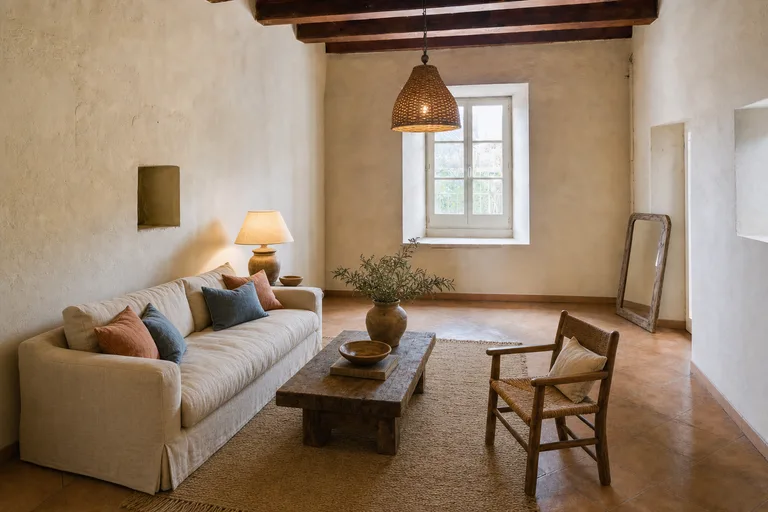
Mediterranean
Sun-baked plaster, terracotta and olive green: the warmth of the south, without the souvenirs.
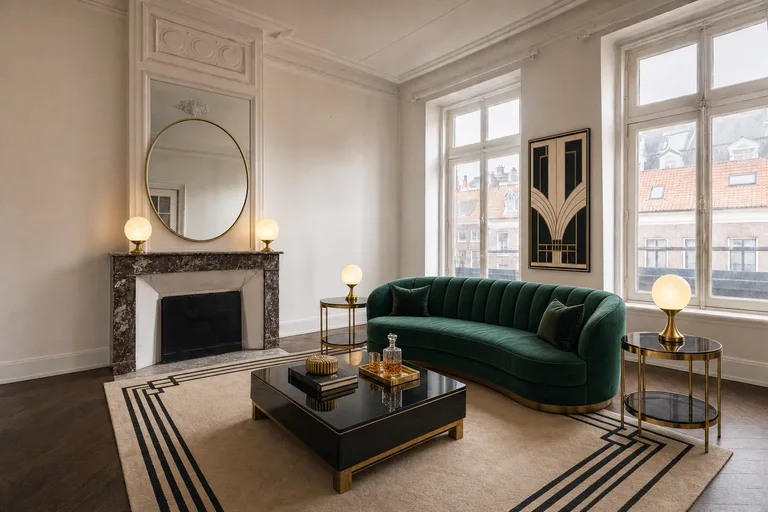
Art Deco
Geometry, brass and deep velvet: the glamour of the 1920s, disciplined for a real home.
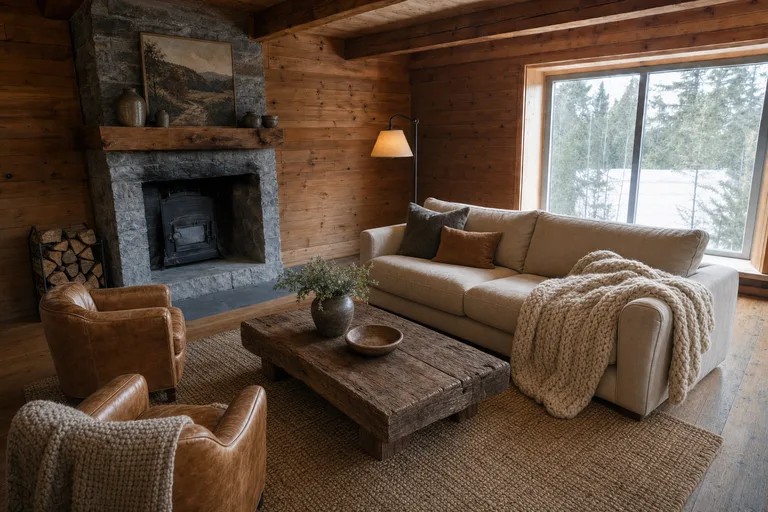
Rustic
Heavy timber, stone and wrought iron: raw materials doing the talking, without the cabin kitsch.
Your home, minimalist
Upload your photos and see every room decluttered and restyled in minutes. The first five images are free, no credit card, and your originals are always kept.