Staging buyers can trust — and portals accept
Every portal and MLS asks the same thing: edited photos must be honest and recognizable. Twelve Lumens builds that in — an optional "virtually staged" label on exports, originals always delivered, and showcase pages that disclose automatically.
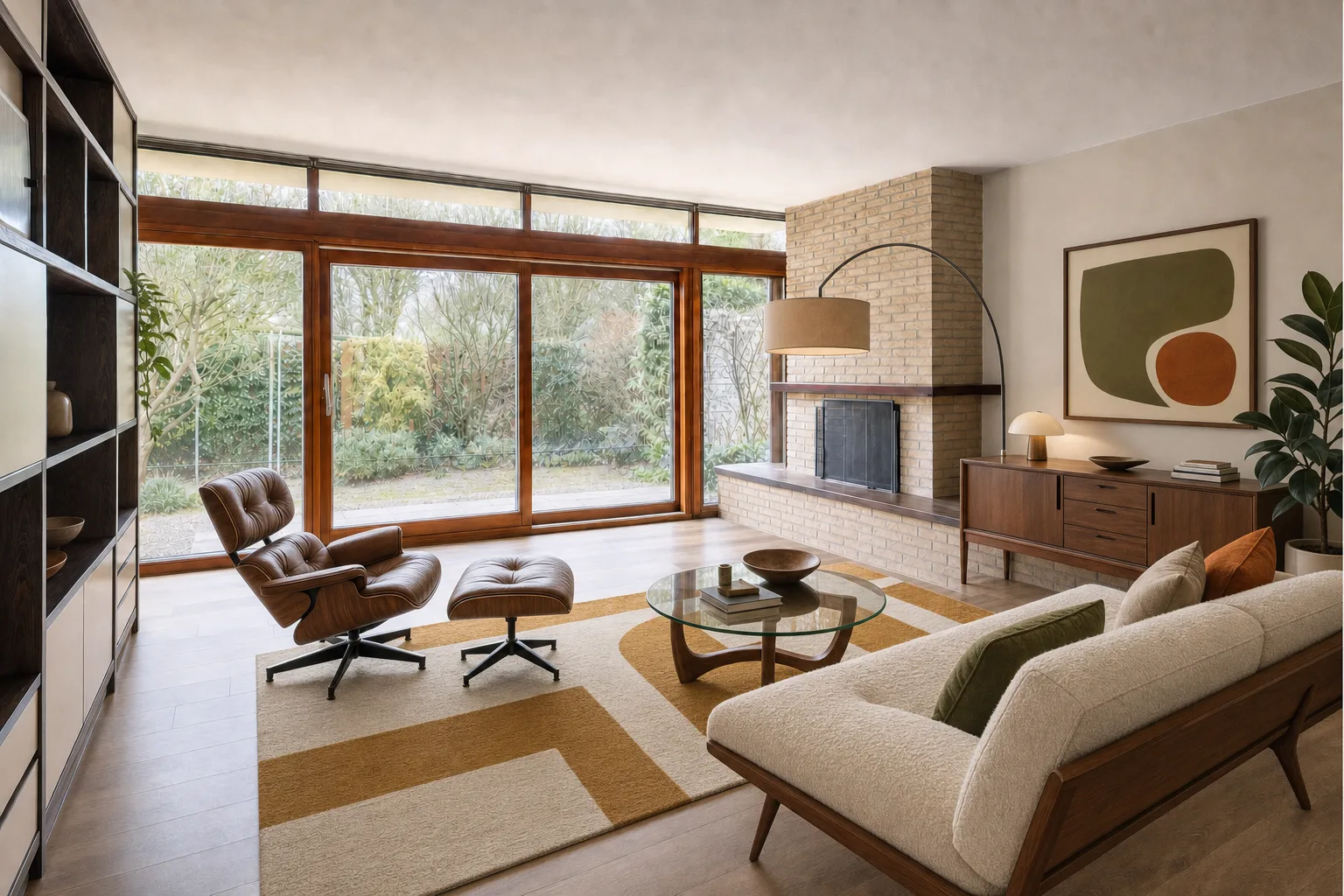
Why disclosure wins deals instead of losing them
A buyer who feels tricked at the viewing is a lost buyer. A buyer who saw "digitally staged" under a beautiful photo and came anyway is pre-sold on the potential. Disclosure isn't a legal chore — it's what makes staged photos persuasive instead of suspicious.
What the portals actually ask
The rules rhyme everywhere: images must not misrepresent the property's fixed features, edits should be recognizable or labeled, and originals should exist. Funda expects a visible in-image note on AI-edited photos; MLS rules require disclosure of digitally altered images; EU transparency rules increasingly expect AI-generated content to be labeled. The label option covers all of them in one move.
- Optional in-image label, on by default where required
- Originals always kept and exported alongside
- Showcase pages disclose automatically
- Architecture is never altered — only furnishing
Write the label in your own words
The built-in label works out of the box, but your office can carry its own: write the disclosure line the way your firm would phrase it, with a separate text for decluttered and for staged photos — so a decluttered room is never labeled as furnished. Write it in one language and the other four are completed natively, ready for a Dutch listing and an English buyer alike. Pick a bar style that suits your photography, and white-label plans add your logo and a right-hand line of your own.
One export: labeled, structured, upload-ready
When the listing is ready, export it in one pass: every room in its own folder, files numbered in order, the versions you chose — and the disclosure label already composited into every edited image, with originals alongside. What lands in your downloads is exactly what the portal uploader wants to swallow: open the ZIP, drag the folder in, done.
Honest by architecture
The strongest compliance feature is what the tool refuses to do: walls, windows, floors and fixed features are never moved or invented. Staging only adds furniture and decor to rooms that really exist, which means the photo stays a truthful record of the property — furnished.
Common questions
Do I have to disclose virtual staging?
On most portals and MLSs, yes in some form — edited images must be recognizable, labeled or disclosed in the listing. Even where it's not written down, disclosure protects the viewing: buyers who know upfront are impressed, buyers who find out on site are annoyed.
What does the disclosure label look like?
A small, unobtrusive line rendered into the image — "digitally staged, for inspiration" — positioned so it's legible without hurting the photo. You toggle it per export; showcase pages carry their own disclosure automatically.
Does Twelve Lumens ever alter the property itself?
No. Walls, windows, doors, floors and fixed features stay exactly as photographed — staging only adds furniture and decor. That constraint is what keeps a staged photo defensible: the property in the image is the property.
What about the EU AI Act and similar rules?
Transparency rules increasingly expect AI-generated or AI-edited content to be identifiable — visible labeling is exactly the mechanism regulators point to. The in-image label plus originals-alongside covers the practical requirement, and we track the rules as they firm up.
Works together with
Stage transparently from day one
Try it on a listing — label on, originals alongside, portals satisfied. First five images free, no credit card.