Mid-century modern interior design
Walnut and teak, low-slung furniture on tapered legs, and color used with conviction. This guide breaks the style down room by room — then shows it on your own photos.
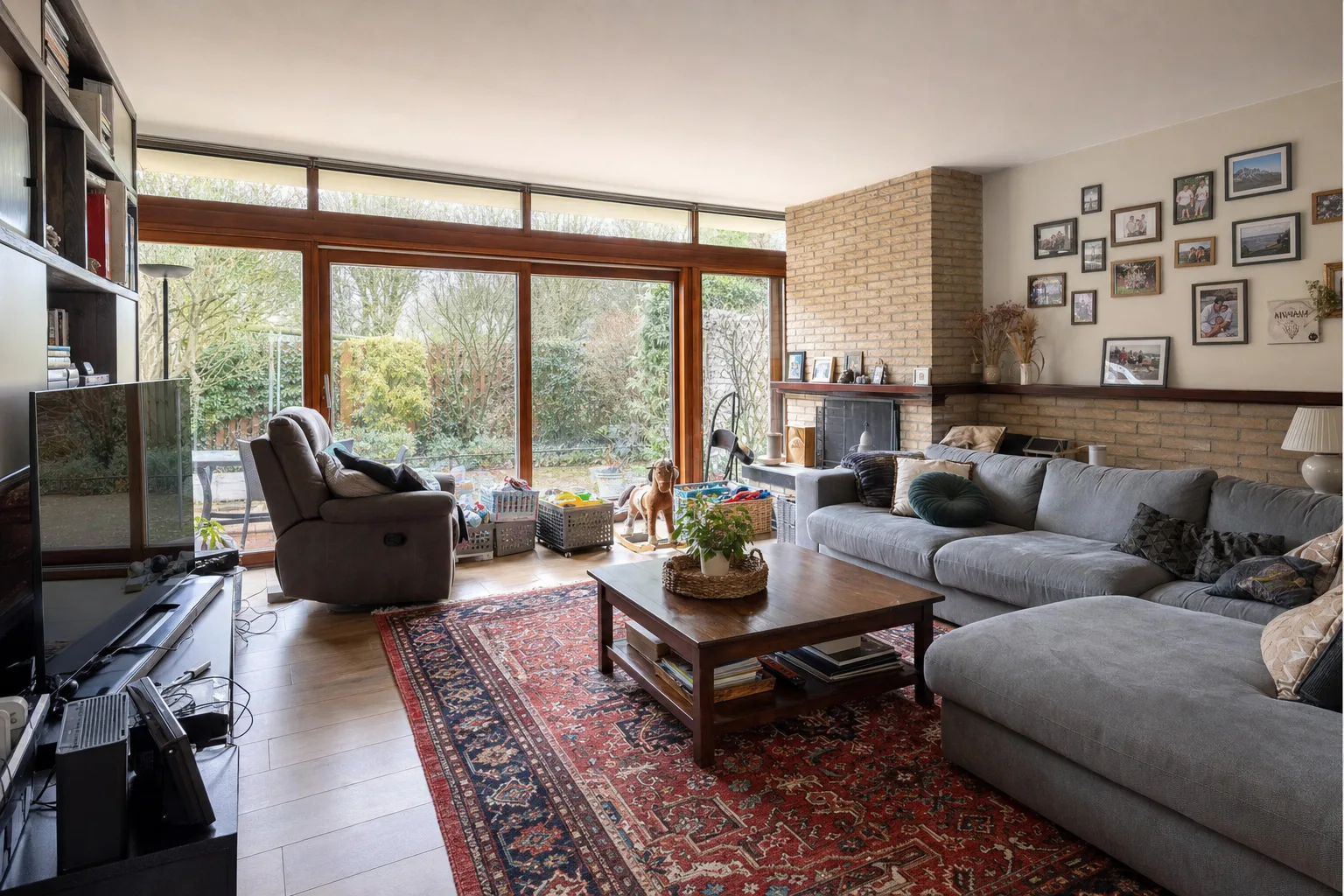
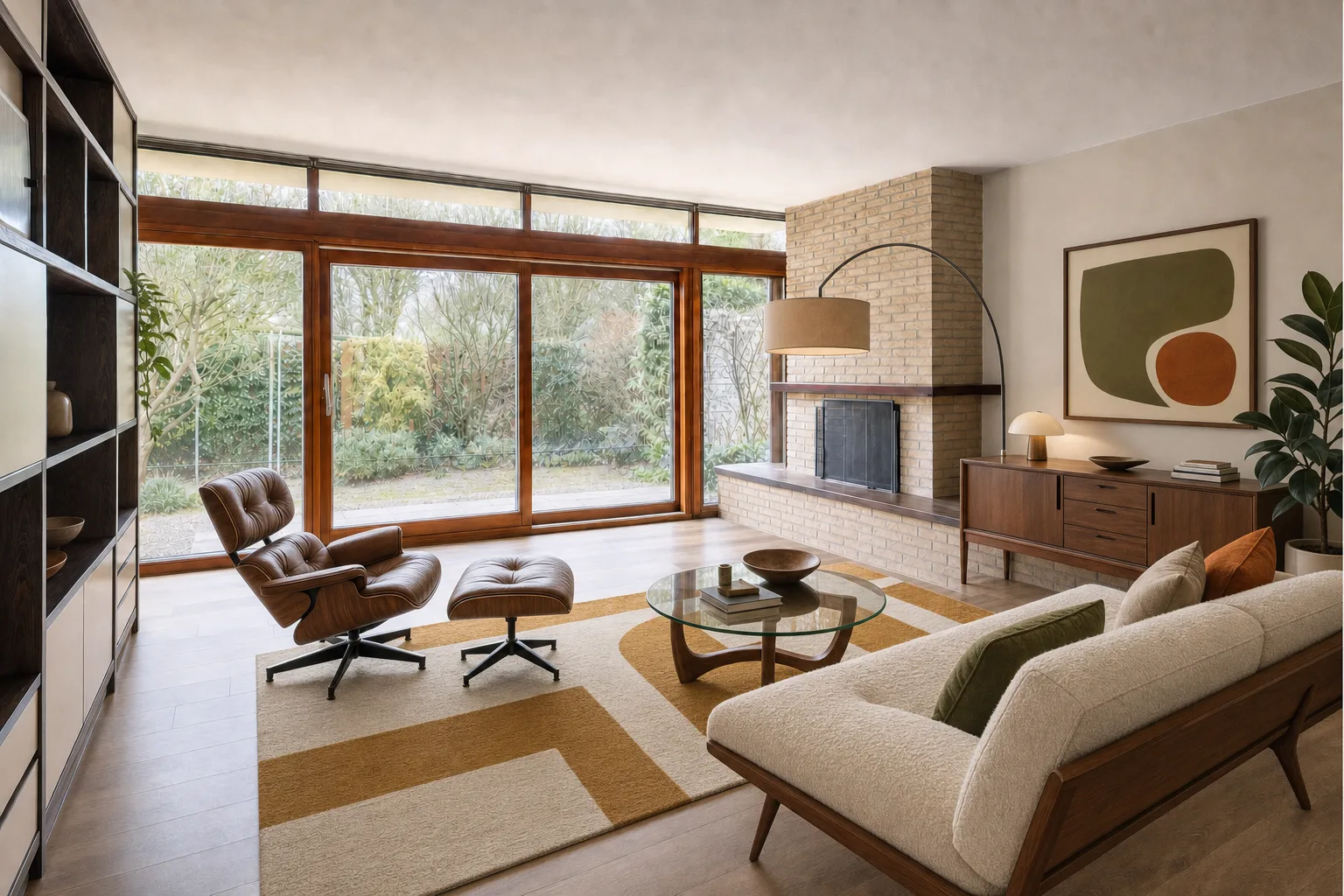 OriginalIn this style
What is mid-century modern design?
Mid-century modern is the design language of roughly 1945 to 1970: organic curves, warm woods like walnut and teak, furniture raised on slim tapered legs, and clean architecture that lets the pieces breathe. Function leads, ornament is minimal, and color arrives in deliberate doses — mustard, olive, teal, burnt orange — against cream and wood grain.
The style grew out of post-war optimism and new materials: molded plywood, fiberglass and steel let designers like Eames, Wegner and Saarinen draw furniture as sculpture that ordinary families could actually own. That is why it still works today — the pieces are compact, honest about their construction, and as much at home in a city apartment as in the suburban houses they were designed for.
The elements of mid-century style
Color & light
- A cream and warm-white base
- Accents of mustard, olive, teal and burnt orange
- Warm brass and smoked glass
- Sculptural pendants and arc floor lamps
- Windows left unblocked — daylight was the point
Materials
- Walnut and teak, matte-finished
- Leather that is allowed to age
- Bouclé, tweed and wool upholstery
- Molded plywood and fiberglass
- A touch of stone or terrazzo
Furniture
- Low-slung sofas on tapered legs
- One long, low credenza doing the storage
- A lounge chair with its ottoman
- Pedestal or oval dining tables
- Slim-framed open shelving
Details
- One large abstract artwork over a gallery wall
- Ceramics and glass in accent colors
- A rubber plant or monstera in a plain pot
- Geometric rugs used with restraint
- Books stacked flat, spines out
The mid-century palette
Mid-century modern, room by room
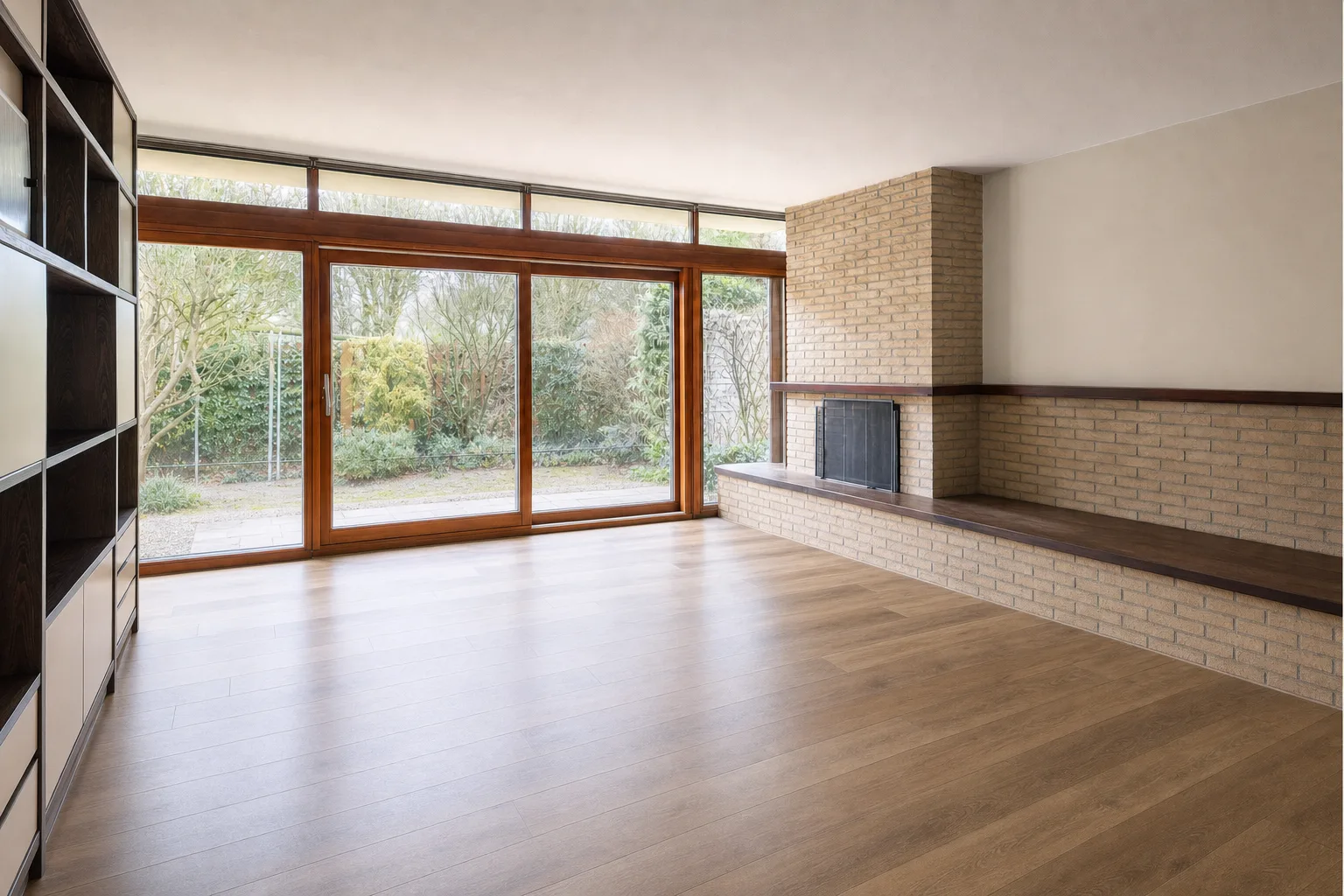
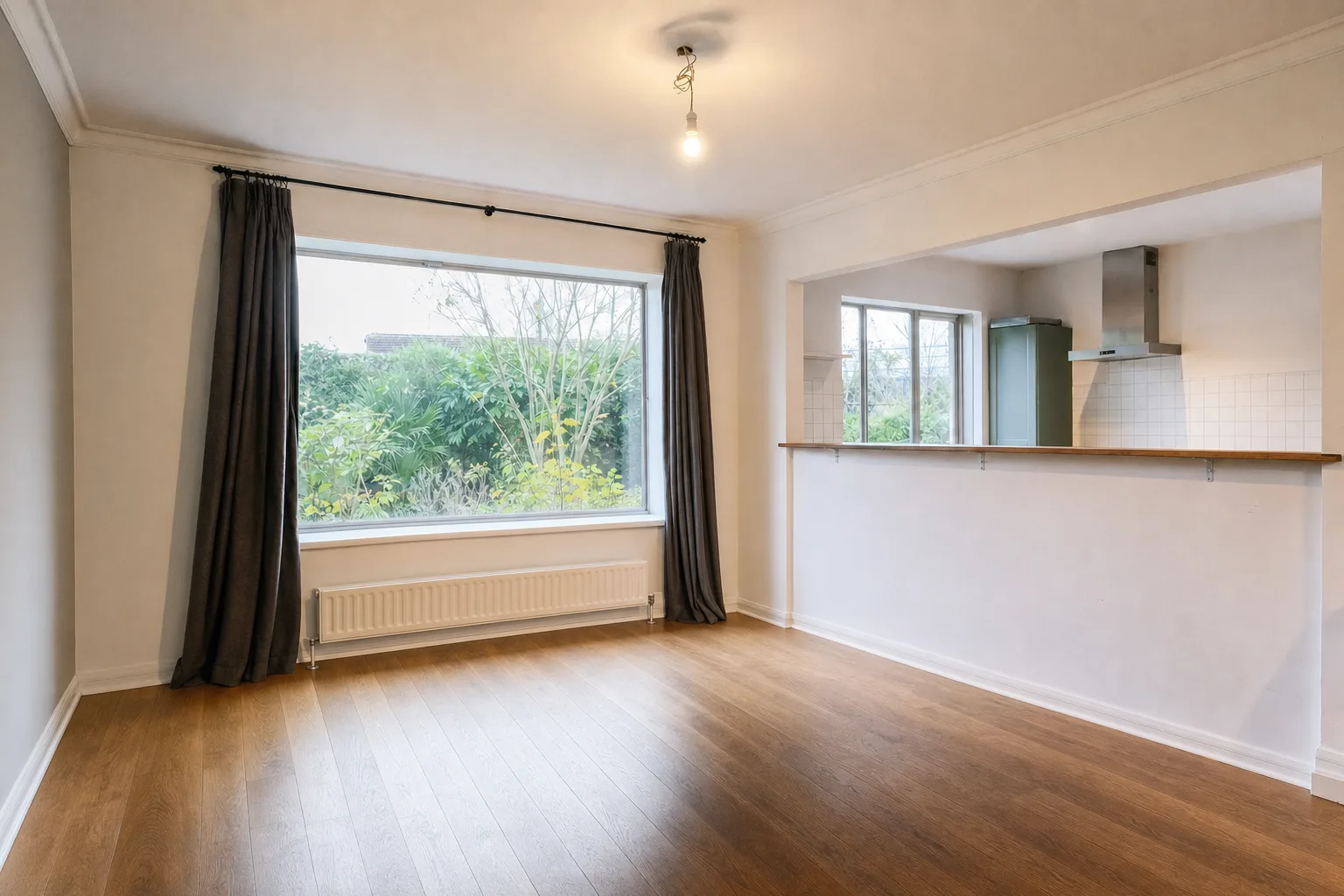
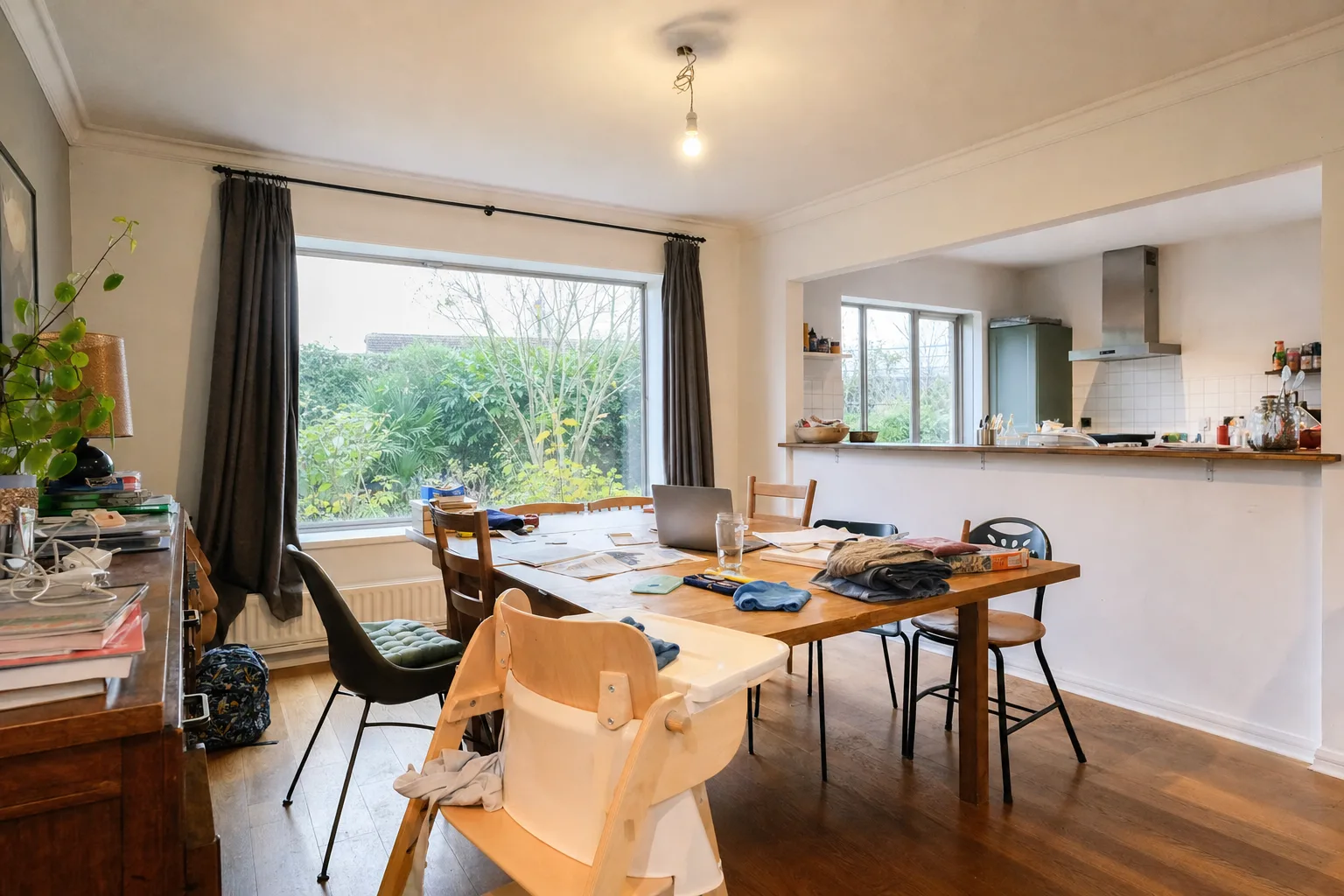
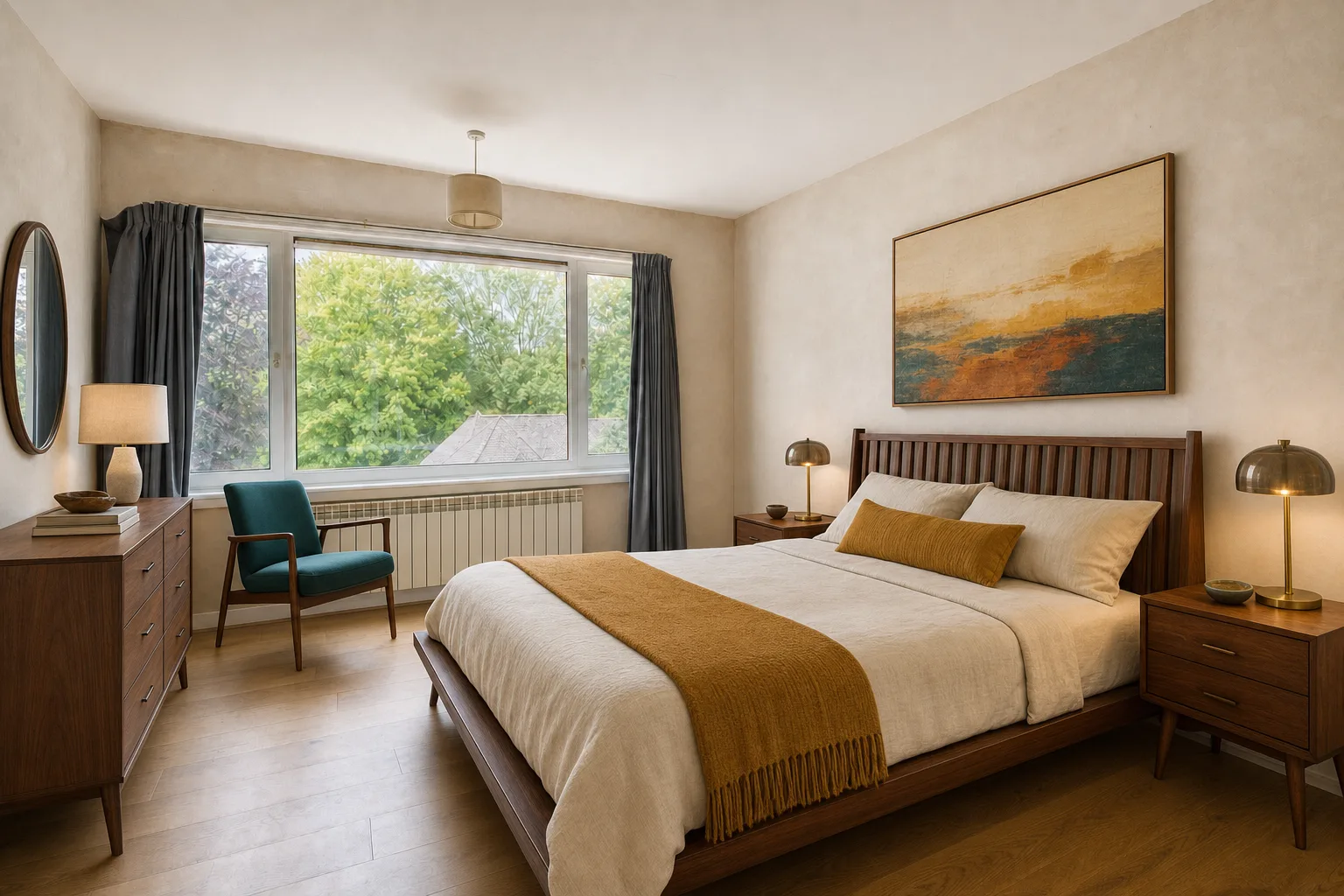
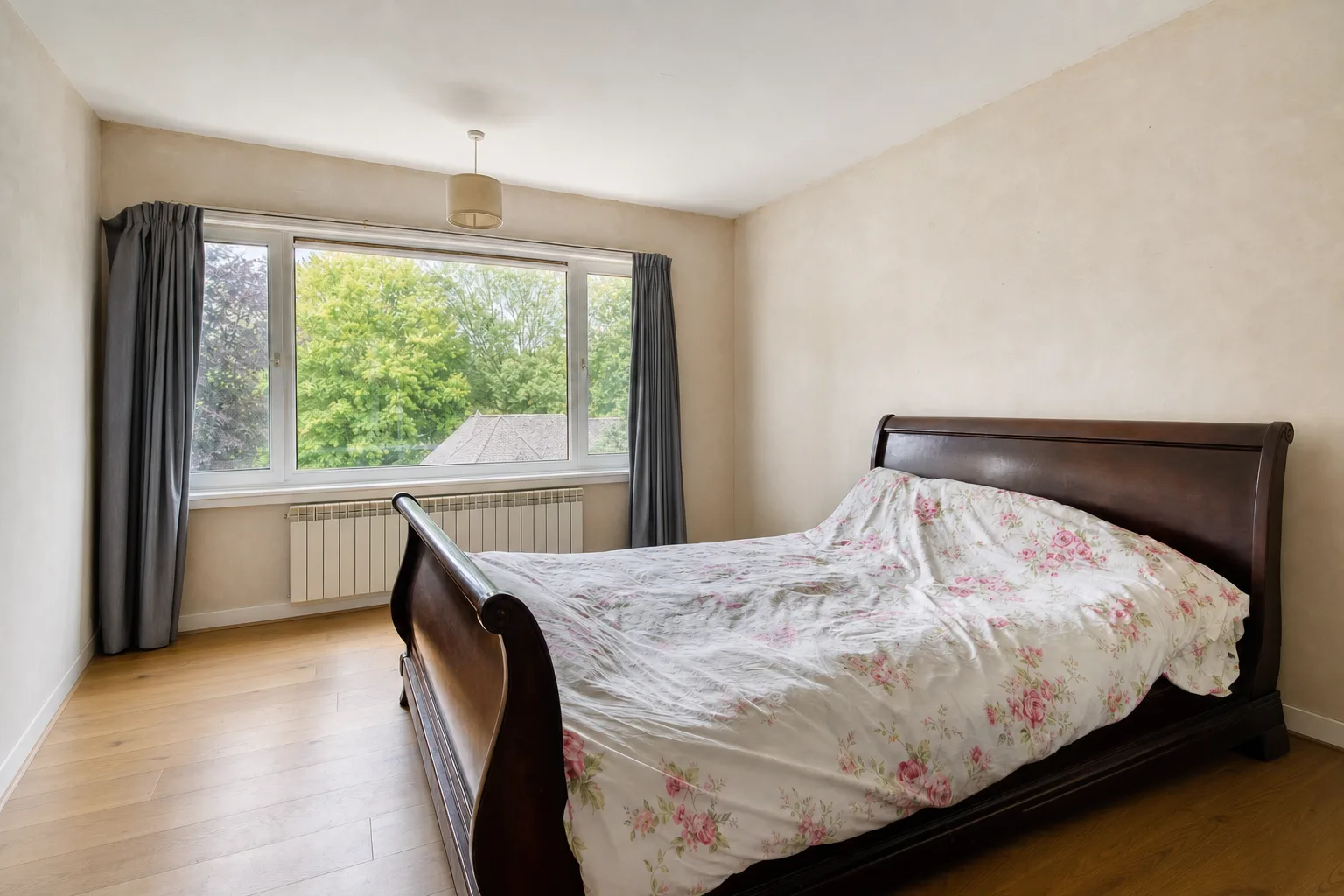
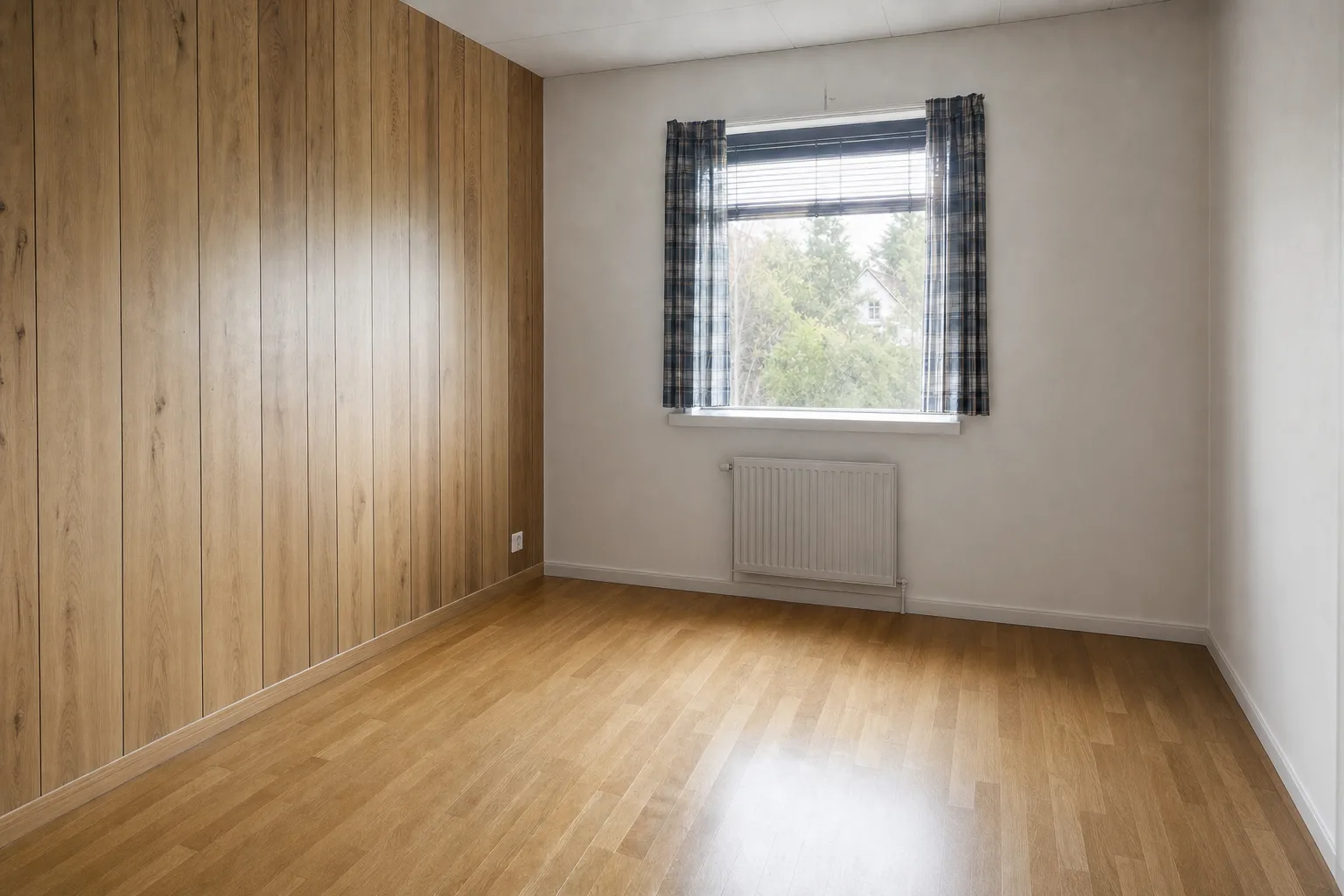
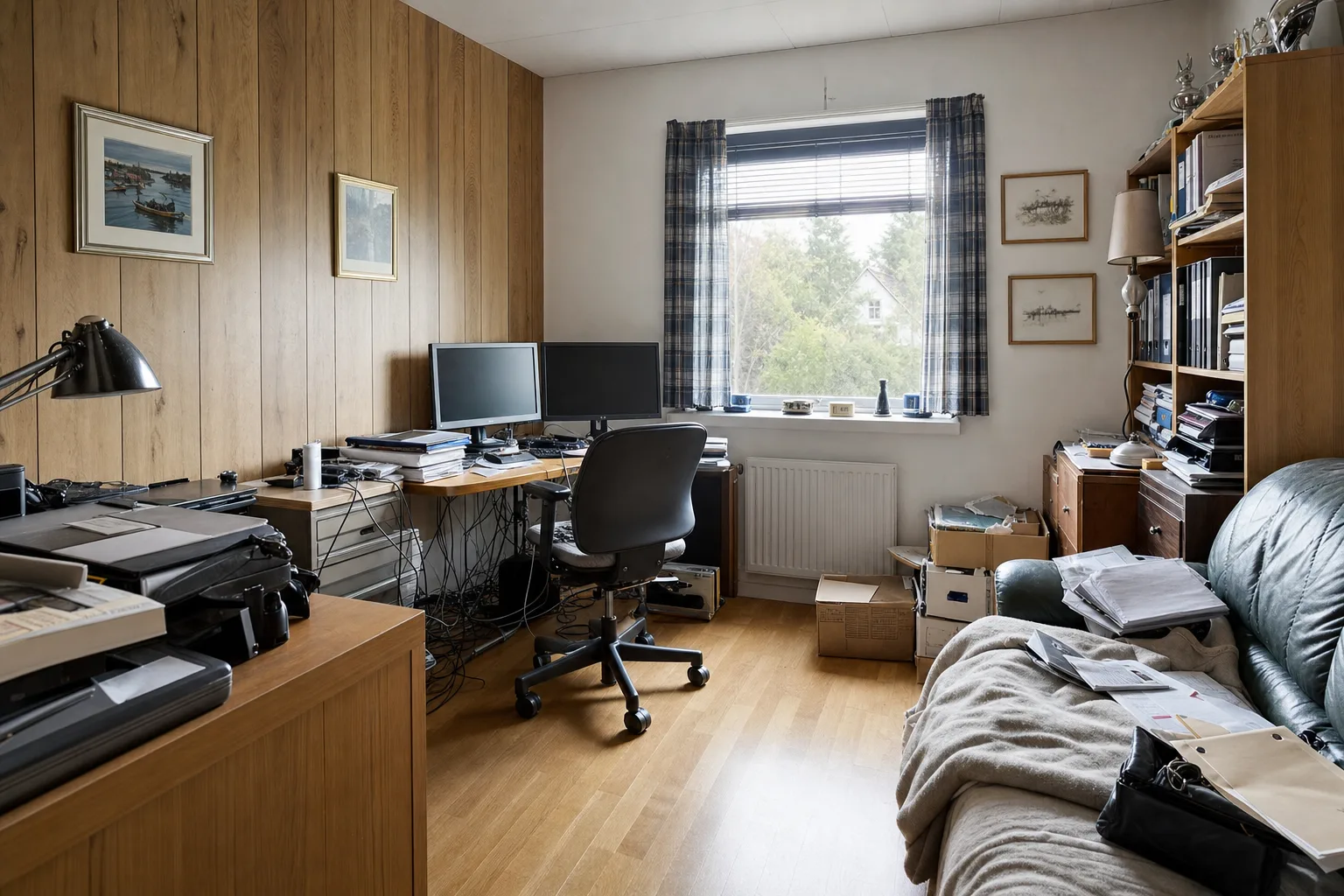
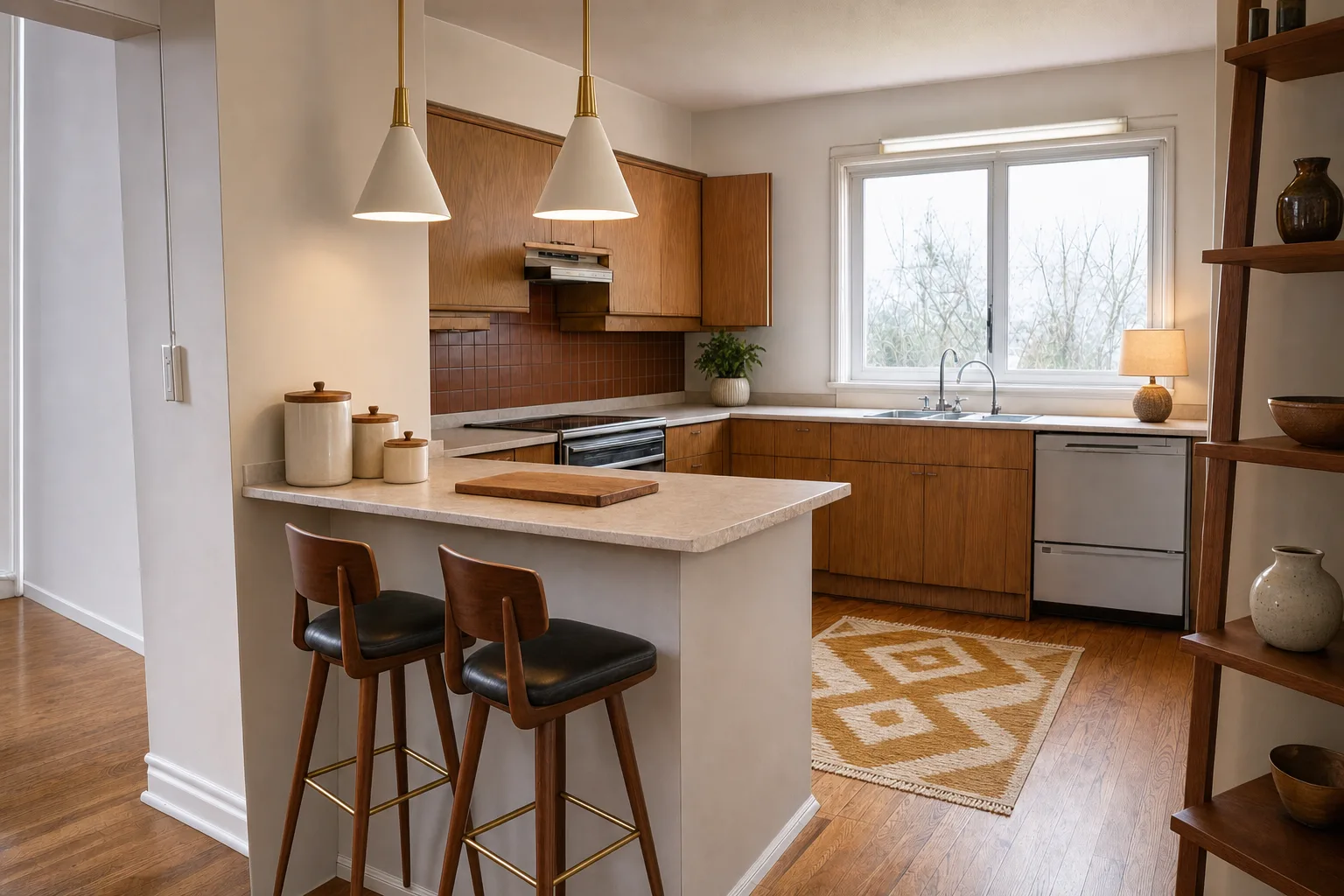
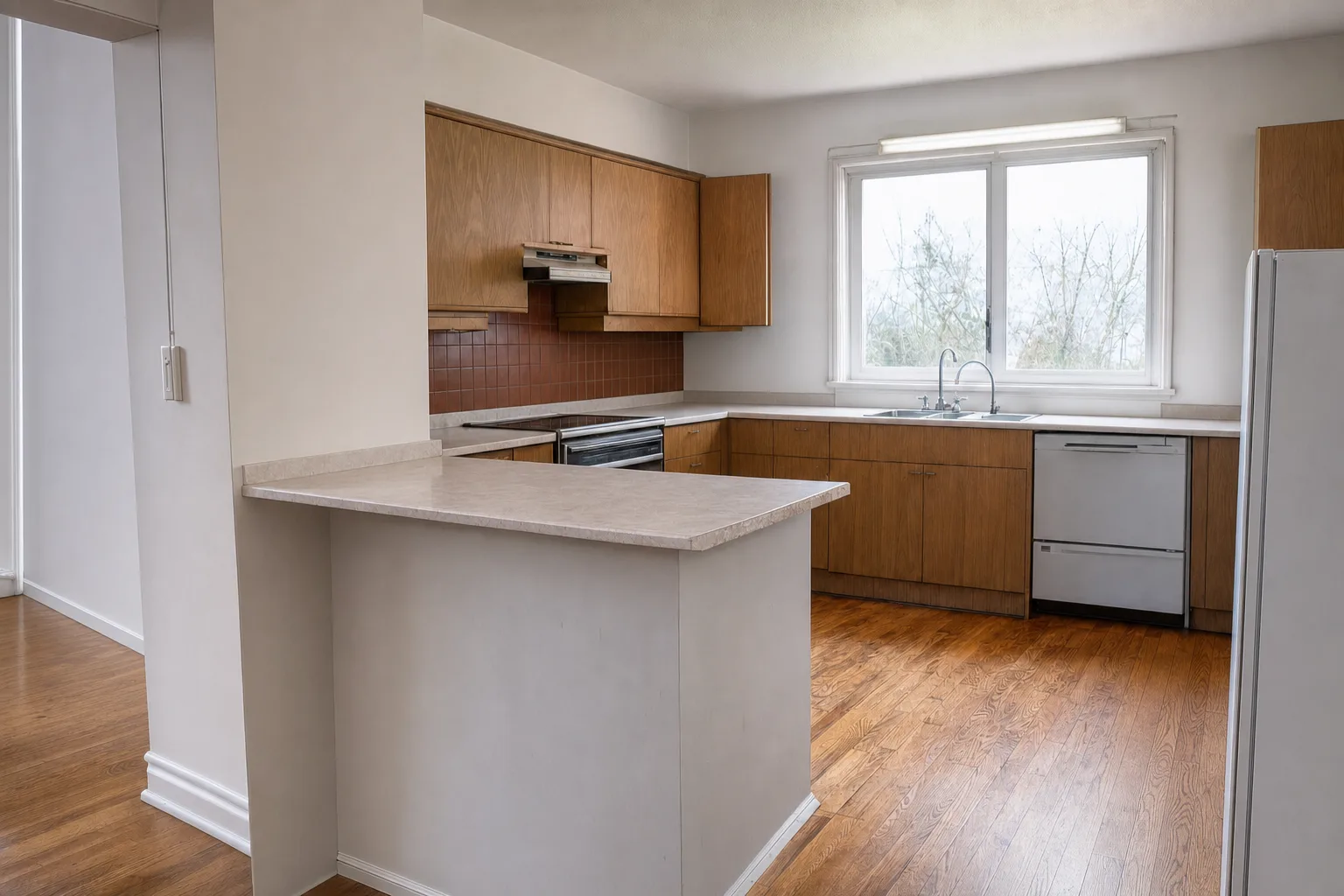
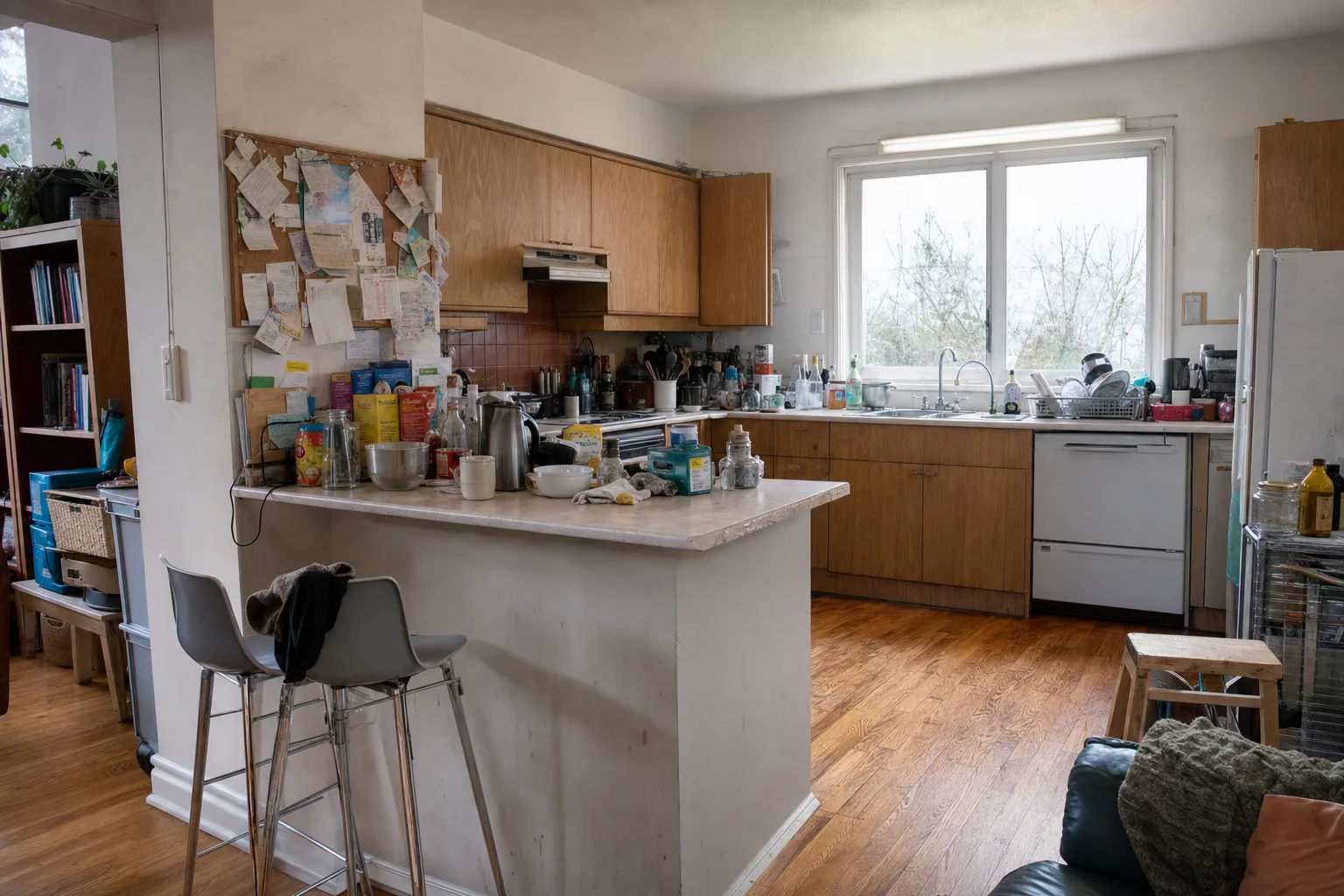
Every photo below is one real room, three ways: as it was, decluttered, and furnished in the style. Use the toggle to compare.
The mid-century living room
One low sofa, one genuinely great chair and a long walnut credenza will do more than a full furniture set. Keep every piece up on legs so the floor runs underneath, lay a geometric or flat-weave rug, and hang one large abstract work instead of a gallery wall. Color belongs in the accents — two cushions and a lamp, not four painted walls.
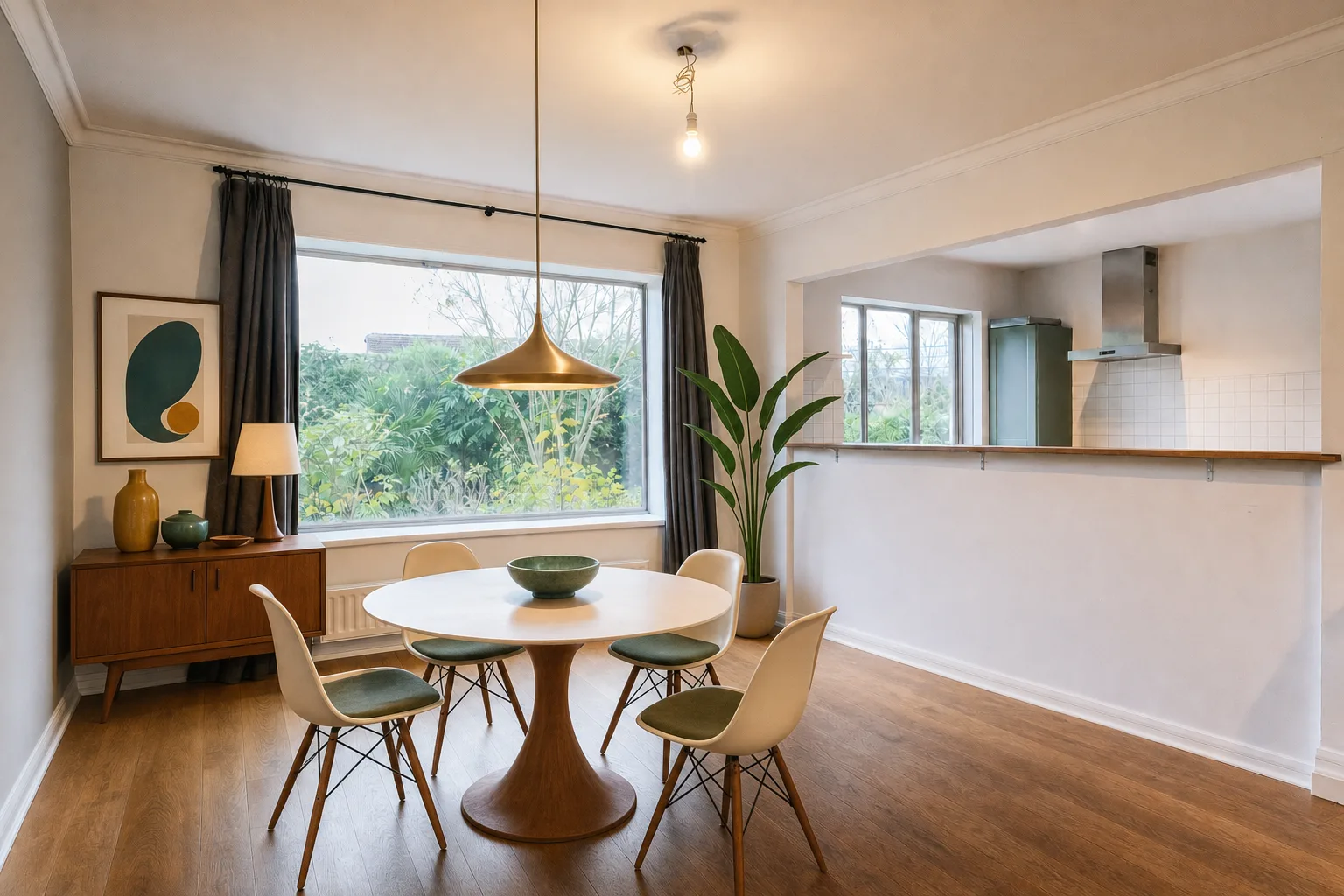
The mid-century dining room
The mid-century dining room is an exercise in silhouette: a round or oval table — a pedestal base keeps the leg-room free — ringed by molded or spindle chairs, with one statement pendant hung low over the center. Wood tones can mix as long as they stay warm. A credenza against the wall handles storage, serving and the drinks tray.
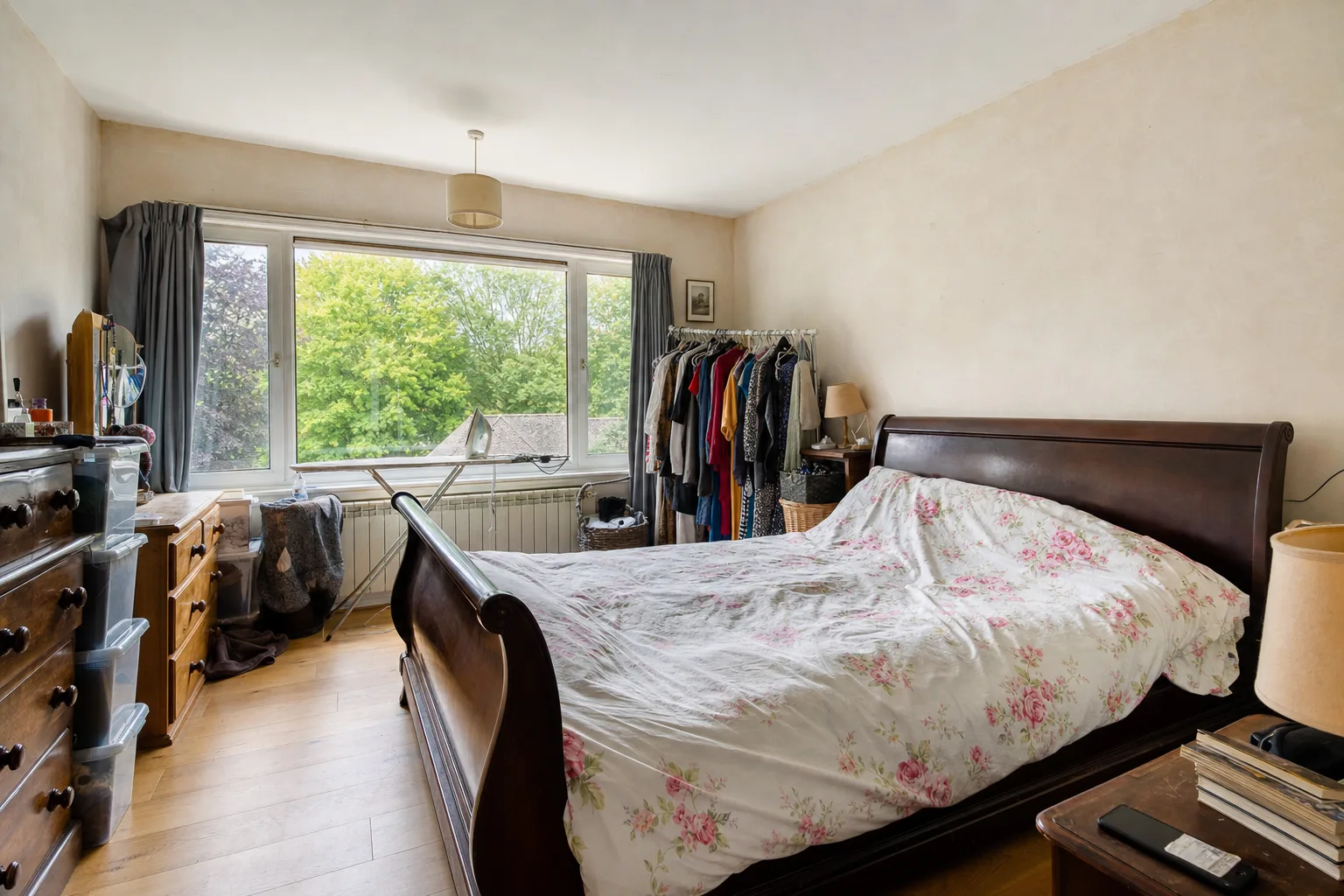
The mid-century bedroom
Go low and warm: a platform bed with a walnut headboard, matching nightstands on slim legs, and brass or smoked-glass lamps either side. One strong accent is enough — an ochre throw, a teal chair in the corner. A low, long dresser keeps the horizon of the room calm and lets a single large artwork carry the wall above it.
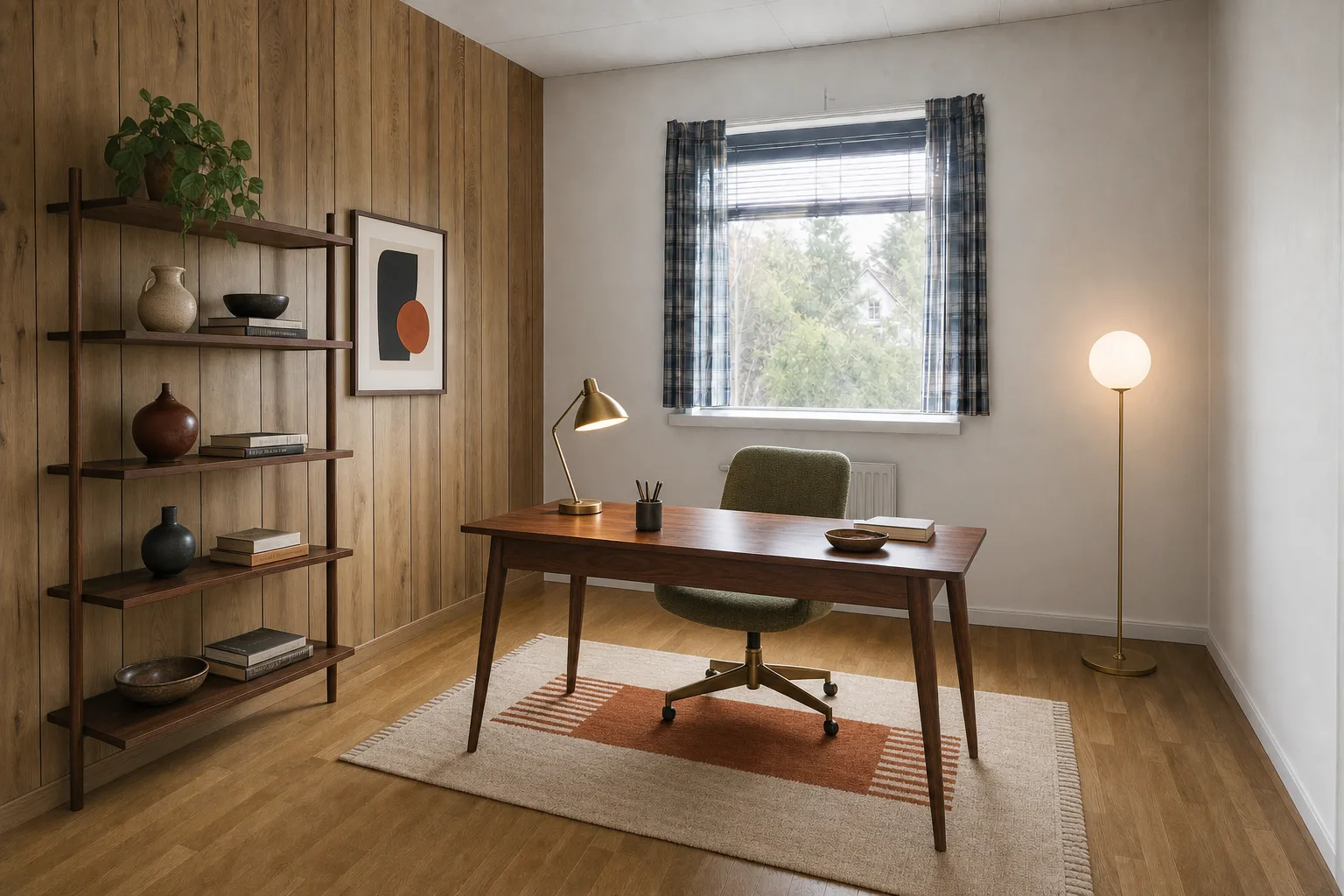
The mid-century home office
A mid-century office wants a desk that looks good from every side — a thin top on tapered legs — an upholstered chair you can actually sit in for hours, and open wood shelving holding books, ceramics and a plant rather than clutter. An arc or globe lamp warms the evening; the cables disappear behind the credenza.
The mid-century modern kitchen
Flat walnut or teak-toned fronts, or painted flat panels in olive or mustard, with slim metal or wooden handles: the cabinetry does the mid-century talking. Keep counters nearly clear, add wooden bar stools with tapered legs if there is an island or peninsula, hang one or two globe or cone pendants, and let a geometric runner or a wall of open teak shelving with ceramics carry the warmth. Period looks, present-day function.
See your own home in mid-century modern
Upload a few photos of your rooms. Twelve Lumens declutters them and refurnishes them in mid-century style in minutes — walls, windows and floors untouched, originals always kept. The first five images are free, no credit card.
Upload your photos
Straight from your phone — any room, exactly as it looks today.
Declutter, then restyle
One click clears the clutter; another furnishes the room in this style. Walls, windows and floors stay exactly where they are.
Compare and share
Original and restyled side by side, in high resolution — download them or share a before-and-after page.
Mid-century vs. similar styles
Mid-century vs. Scandinavian
Close cousins from the same era — but Scandinavian lightens everything: pale oak instead of walnut, muted tones instead of mustard and teal, daylight over drama. Mid-century is the bolder, darker, more sculptural sibling.
Mid-century vs. Danish modern
Danish modern is the Scandinavian branch of the same movement — lighter woods, visible joinery, quieter color, craft first. American mid-century is more graphic: darker walnut, brighter accents, more glass and steel.
Mid-century vs. Art Deco
Deco is glamour — gloss, gold, symmetry, geometry as decoration. Mid-century is casual and democratic: matte woods, honest materials, ornament stripped back to silhouette. Deco rooms pose; mid-century rooms get lived in.
Mid-century modern — common questions
What defines mid-century modern furniture?
Slim tapered legs, low horizontal profiles, warm woods like walnut and teak, and shapes that read as silhouettes — the Eames lounge chair, the pedestal table, the long credenza. Construction is honest and visible; ornament is almost entirely absent.
What colors go with walnut and teak?
Cream and warm white as the base, then the classic accent range: mustard, olive green, teal and burnt orange. Use them in doses — cushions, a lamp, one chair — against plenty of wood grain. Brass and smoked glass tie the warm tones together.
Is mid-century modern still in style in 2026?
Yes — it has been continuously in style since the 1990s revival, long enough that it now reads as a classic rather than a trend. The pieces are compact and practical, which keeps them relevant in modern apartments; the current take simply mixes them more loosely with contemporary furniture.
How do I keep mid-century from looking like a theme set?
Limit yourself to two or three true mid-century pieces per room — one seat, one storage piece, one light — and keep the rest quiet and contemporary. Skip matching suites entirely; the style was always about individual pieces earning their place, not showroom sets.
Can I preview my room in mid-century style before buying anything?
Yes — upload a photo of your room to Twelve Lumens and it comes back decluttered and refurnished in mid-century style in minutes, with the architecture untouched and the original kept alongside. The first five images are free, so you can test a room or two before spending anything on furniture.
More styles to explore
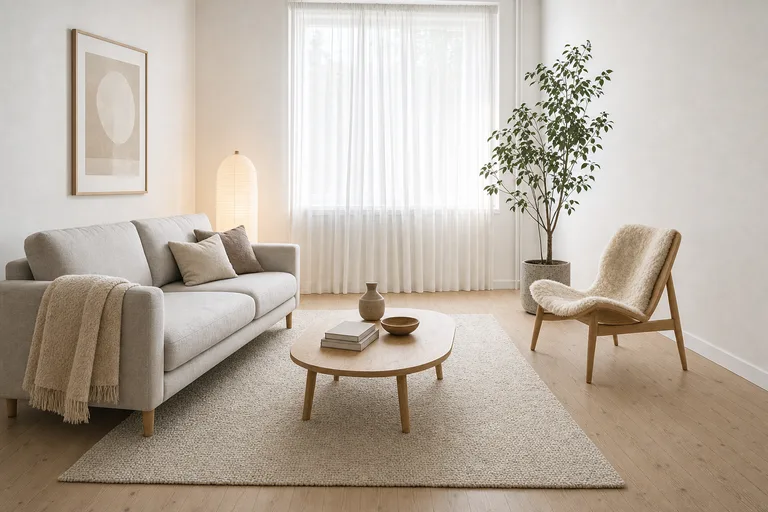
Scandinavian
Pale wood, warm white and soft texture — calm, bright rooms built for real life.
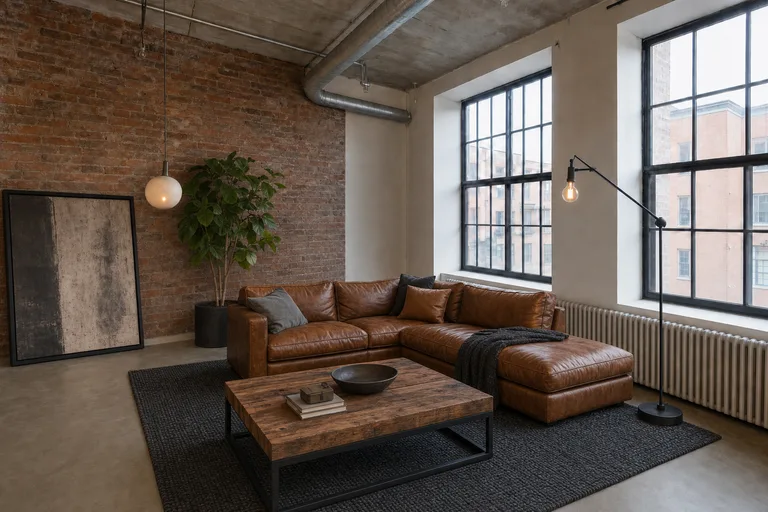
Industrial
Brick, steel and leather — raw materials made warm enough to live in.
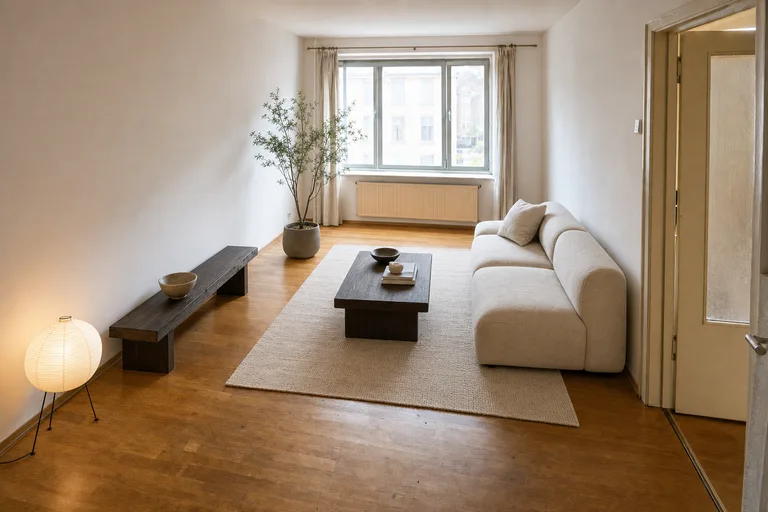
Japandi
Japanese calm meets Scandinavian warmth — low lines, warm wood and deliberate emptiness.
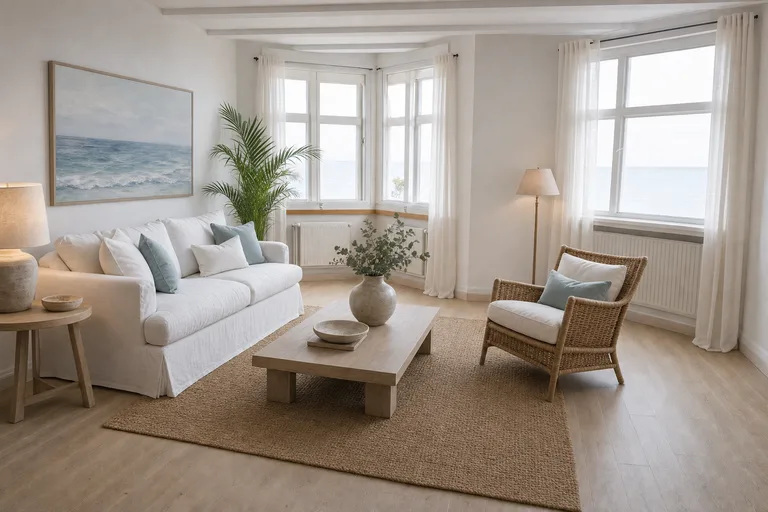
Coastal
Sea light, sand tones and washed linen — the beach-house feel, without the kitsch.
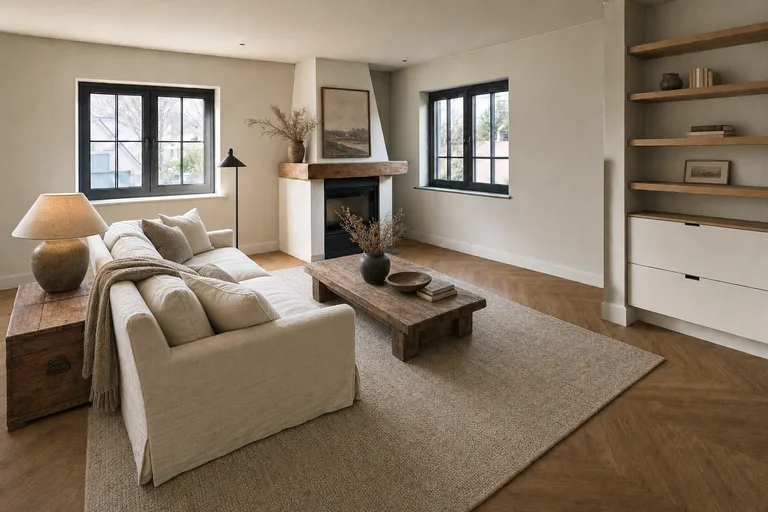
Modern Farmhouse
Clean lines meet rustic warmth — white walls, aged wood and black accents.
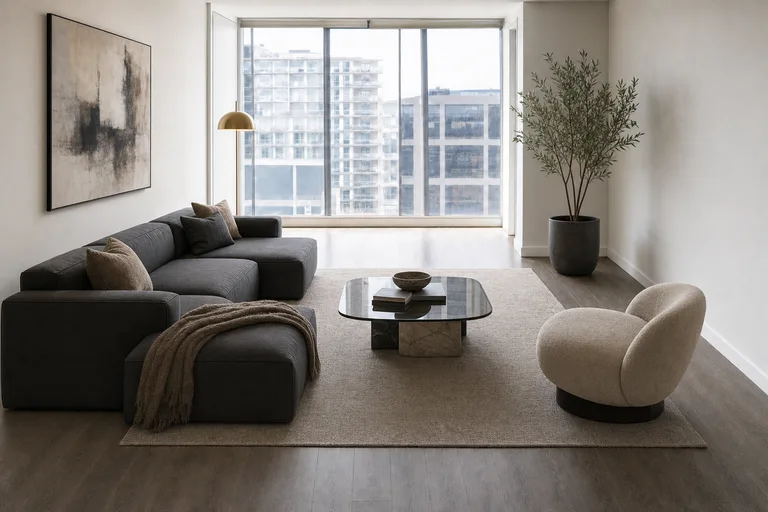
Modern
Clean lines, charcoal and brass — the current city look, warm instead of cold.
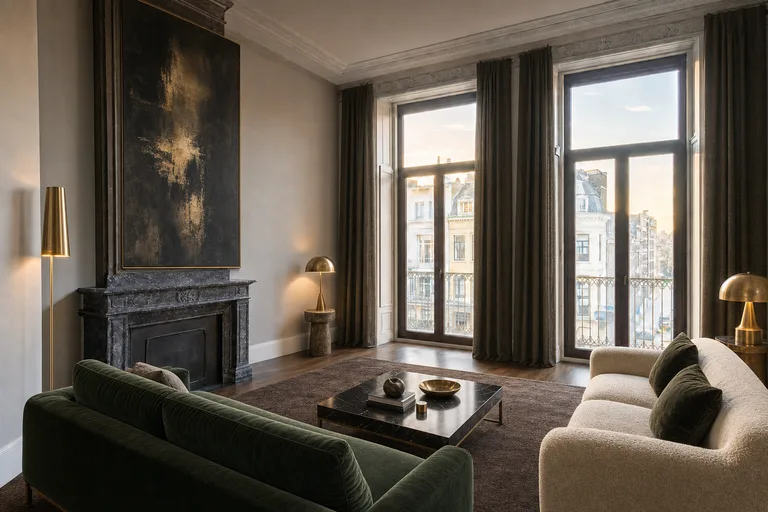
Luxury
Travertine, velvet and brass — editorial restraint where the materials carry the story.
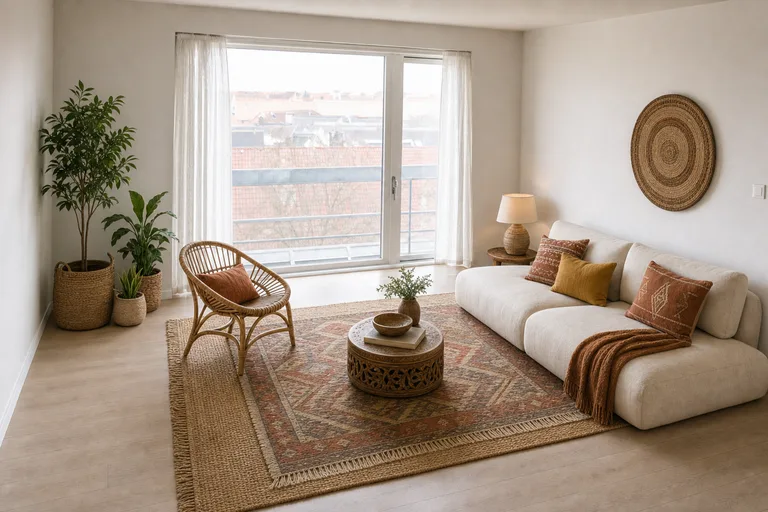
Boho
Rattan, terracotta and layered textiles — the collected look, curated instead of chaotic.
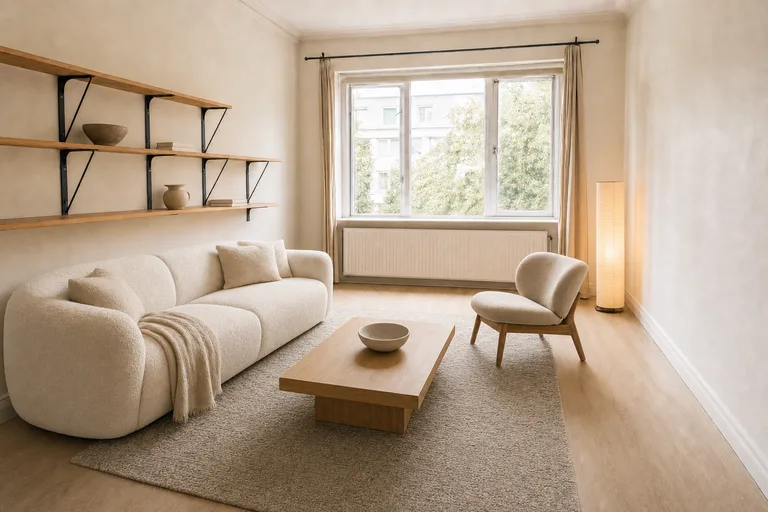
Minimalist
Fewer, better things in a calm shell: warm whites, clean lines and surfaces that stay empty.
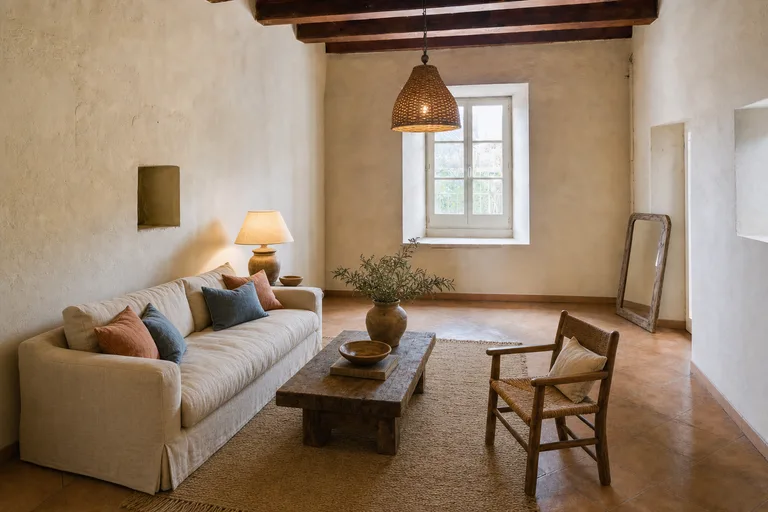
Mediterranean
Sun-baked plaster, terracotta and olive green: the warmth of the south, without the souvenirs.
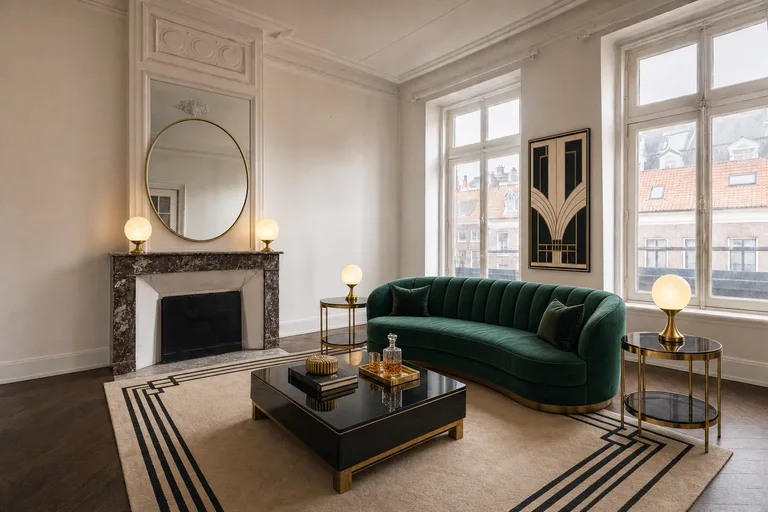
Art Deco
Geometry, brass and deep velvet: the glamour of the 1920s, disciplined for a real home.
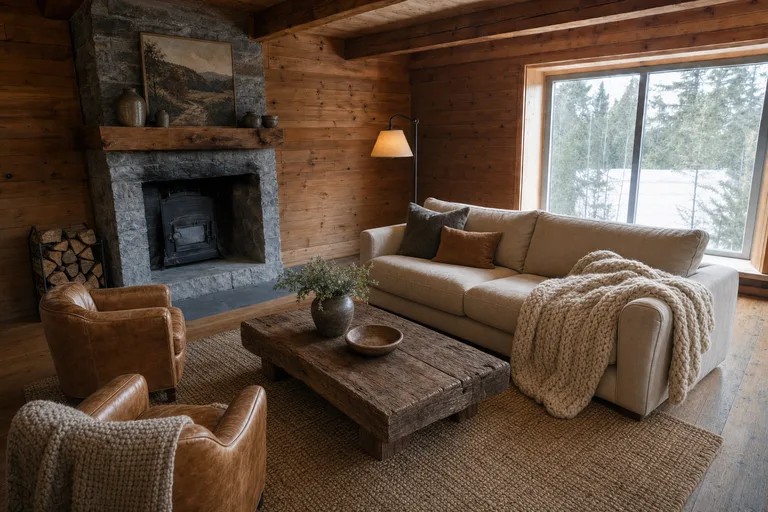
Rustic
Heavy timber, stone and wrought iron: raw materials doing the talking, without the cabin kitsch.
Your home, in mid-century modern
Upload your photos and see every room decluttered and restyled in minutes — the first five images are free, no credit card, and your originals are always kept.